Blackout Shades in Northern Virginia: What to Know
What Makes Blackout Shades Actually Darken a Room?
Blackout shades can make a bedroom, nursery, or media room significantly darker, but choosing a blackout fabric does not automatically create a completely dark room. The fabric, mounting style, edge gaps, window dimensions, and overall shade system all affect the final result.
Rachel Brittain, co-founder of NOVA Blinds, Shades & Shutters, helps Northern Virginia homeowners separate two ideas that are often confused: blackout fabric and a blackout window treatment system.
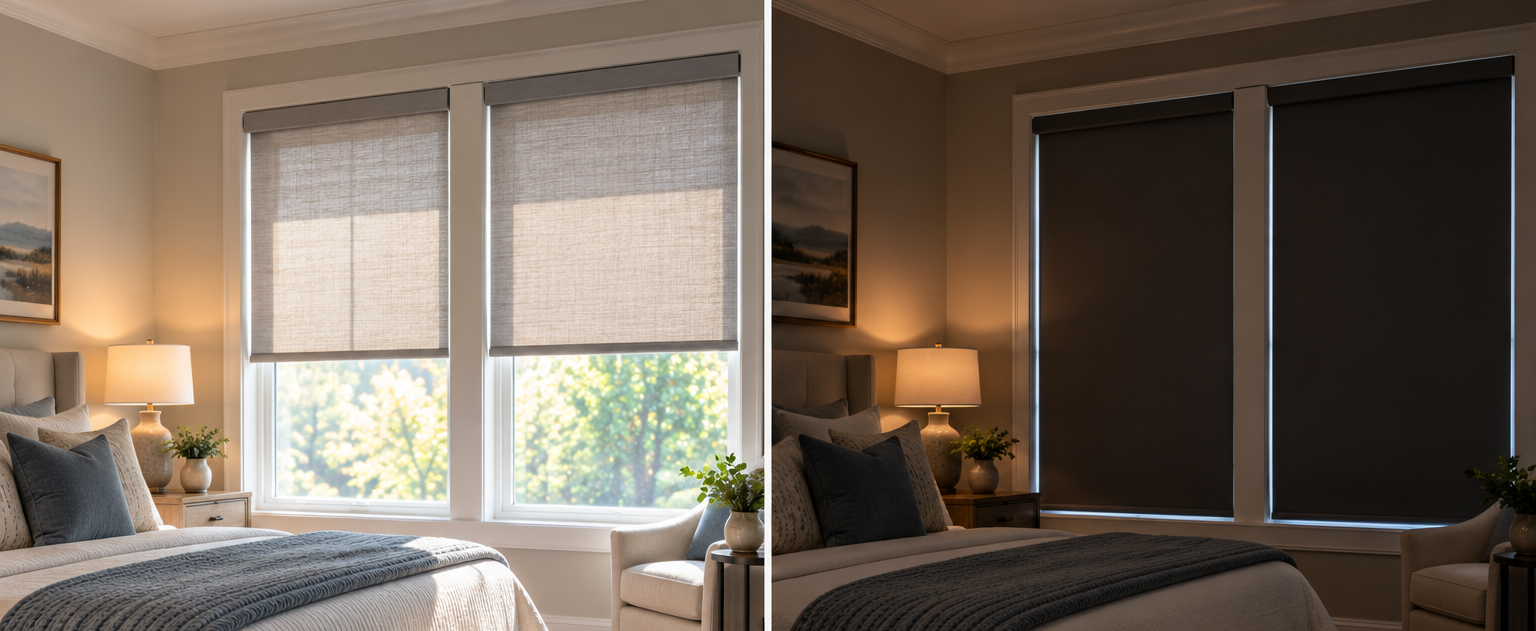
A fabric may block light through the material itself while daylight still enters around the sides, top, or bottom of the shade.
Understanding that difference before ordering can prevent disappointing results.

What Is the Difference Between Blackout and Room-Darkening Shades?
Blackout and room-darkening are often used interchangeably, but they do not always describe the same level of light control.
A room-darkening shade is designed to substantially reduce incoming light. It can make a bedroom noticeably darker while still allowing some daylight into the room.
A blackout fabric is designed to block light from passing directly through the material.
But that does not mean the entire window becomes completely lightproof.
Light may still enter around:
- The sides of the shade
- The top of the treatment
- The bottom rail
- Window trim
- Mounting hardware
- Gaps created by the window itself
That is why homeowners should think about the entire window opening rather than simply asking whether the fabric is labeled blackout.
For many bedrooms, strong room darkening is enough.
For a shift worker sleeping during the day or a media room where light control is especially important, the installation may need to go further.
Why Do Blackout Shades Still Let Light in Around the Edges?
Blackout shades can still allow light around the edges because the fabric usually does not sit directly against every part of the window frame.
Inside-mounted shades are a good example.
The treatment needs enough clearance to move freely within the opening. That creates a small space between the fabric and the sides of the window.
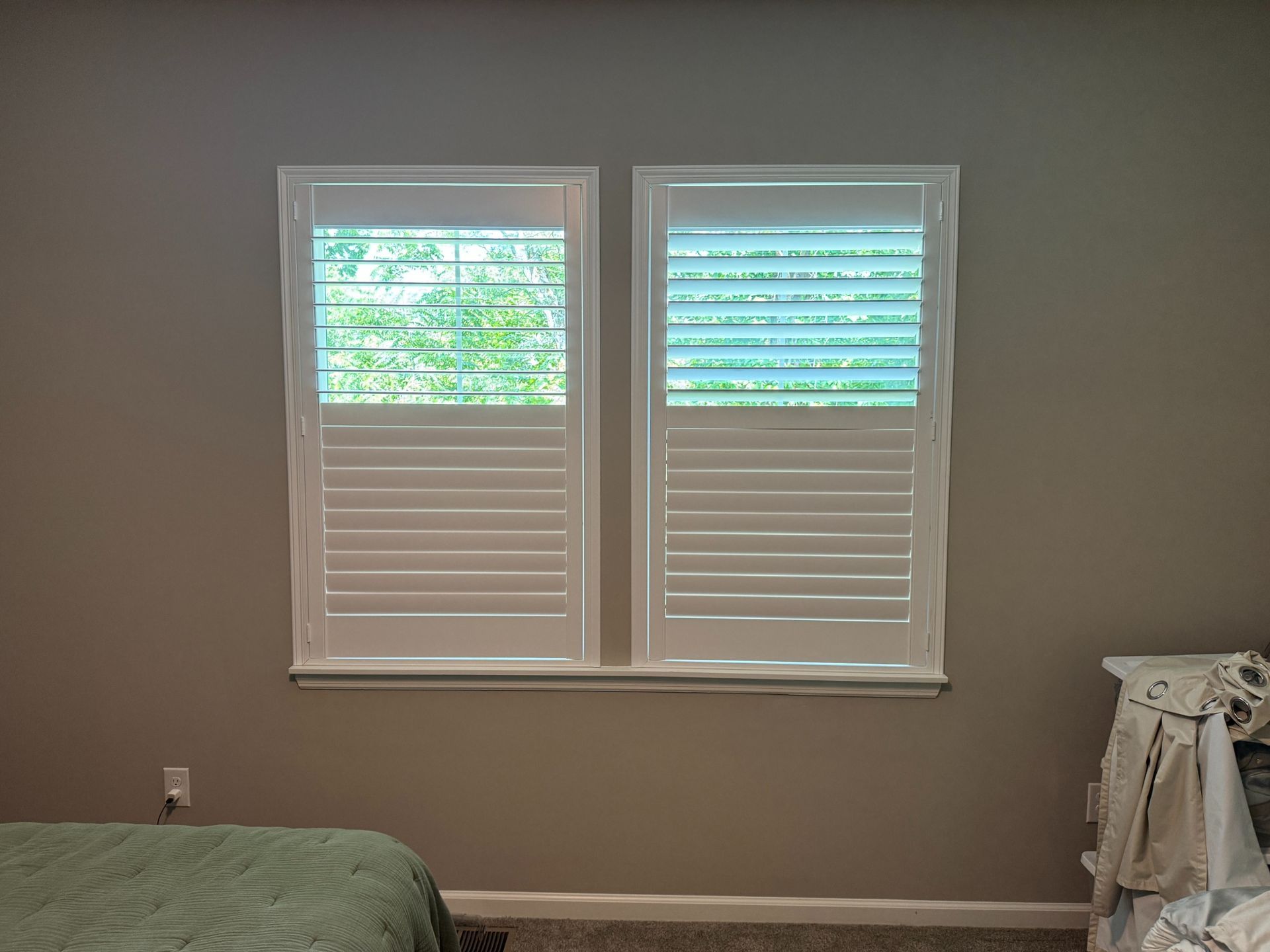
In bright daylight, those gaps can become visible as narrow lines of light.
This is sometimes called a light gap.
The amount of visible light depends on:
- Window construction
- Shade width
- Mounting style
- Fabric thickness
- Roller placement
- Window depth
- Trim
- Direction of sunlight
A west-facing bedroom may show much brighter edge light in the afternoon than a north-facing room.
Rachel considers those details before recommending a shade, especially when darkness is one of the homeowner's main goals.

Are Blackout Shades Good for Bedrooms?
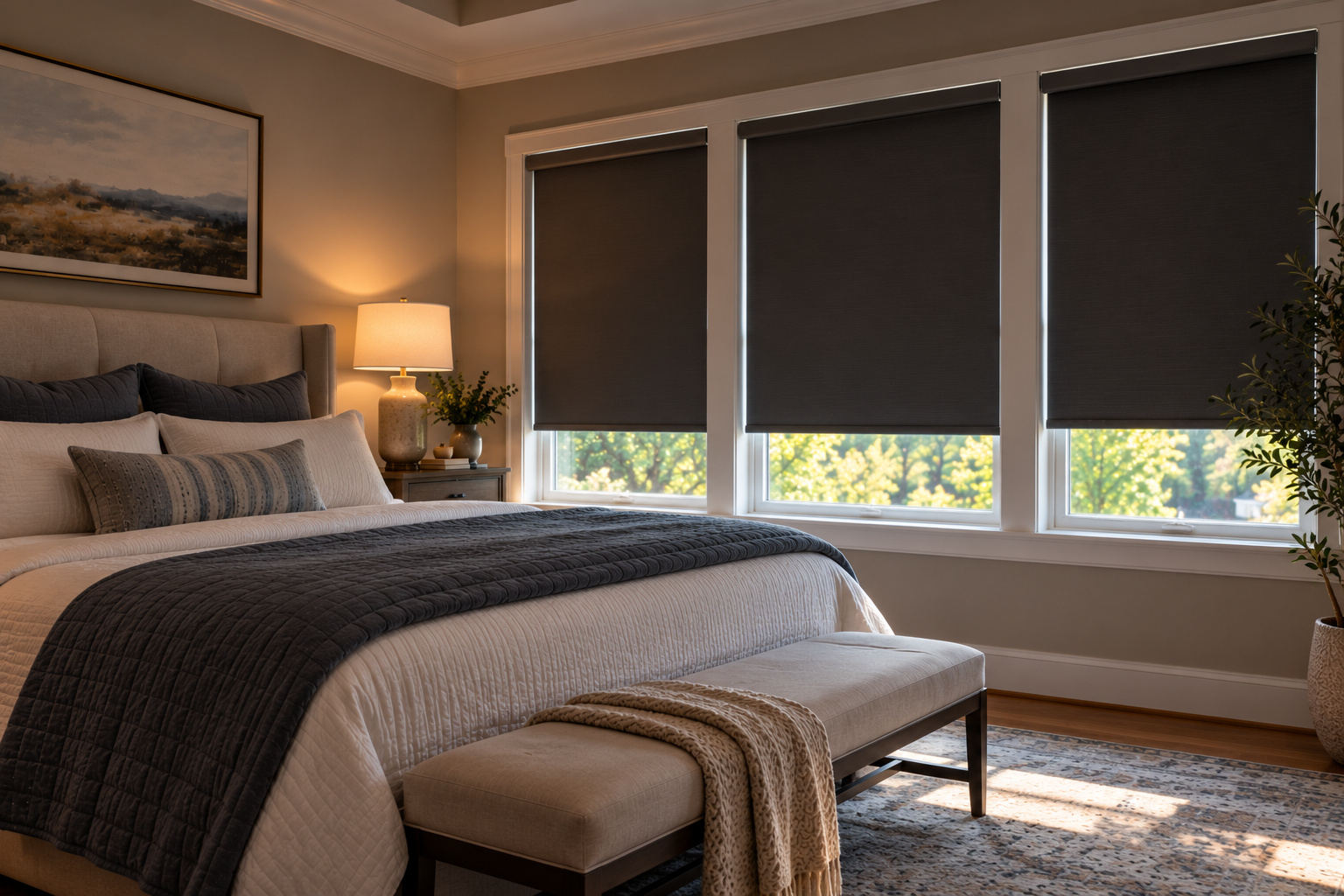
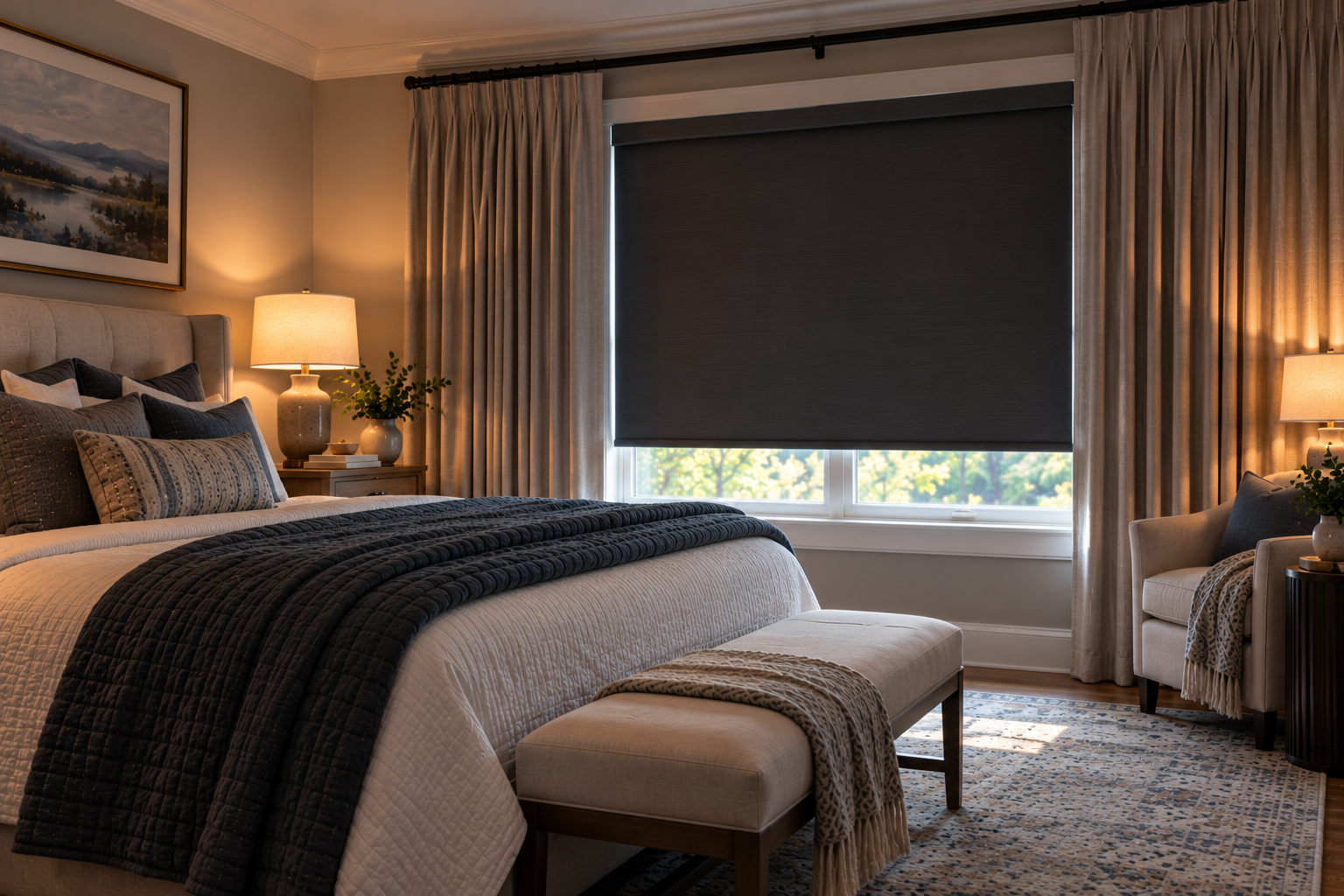
Yes. Blackout and room-darkening shades are especially useful in bedrooms because they allow homeowners to control early morning light, streetlights, and evening privacy.
The best configuration depends on sleeping habits.
A homeowner who wakes naturally with daylight may prefer a room-darkening shade that reduces brightness without eliminating every trace of morning light.
Someone who wants a darker sleeping environment may prefer blackout fabric and greater perimeter coverage.
Other bedroom considerations include:
- Privacy after dark
- Window size
- Streetlights
- Early sunrise
- Afternoon sun
- Motorization
- Cordless operation
- Interior design
In Northern Virginia, bedroom conditions can vary even within the same house.
An east-facing bedroom may receive intense early morning sunlight. A west-facing primary bedroom may stay bright late into a summer evening.
The fabric and mounting approach should match those conditions.
What Blackout Shades Work Best for Nurseries?
Nurseries often benefit from room-darkening or blackout blinds that reduce daylight for naps while also providing privacy and a child-conscious operating system.
Darkness is only one consideration.
Families should also think about how the shade operates.
Cordless and motorized options can help eliminate accessible operating cords from the window area.
A nursery window shade should balance:
- Room darkening
- Child-conscious operation
- Privacy
- Easy everyday use
- Appropriate fit
- Design that can grow with the room
Homeowners should also have realistic expectations.
Even a blackout shade may allow thin lines of light around the edges unless the window treatment is specifically designed to address perimeter gaps.
For many families, strong room darkening provides an excellent balance between function and simplicity.

Are Blackout Shades Good for Shift Workers?
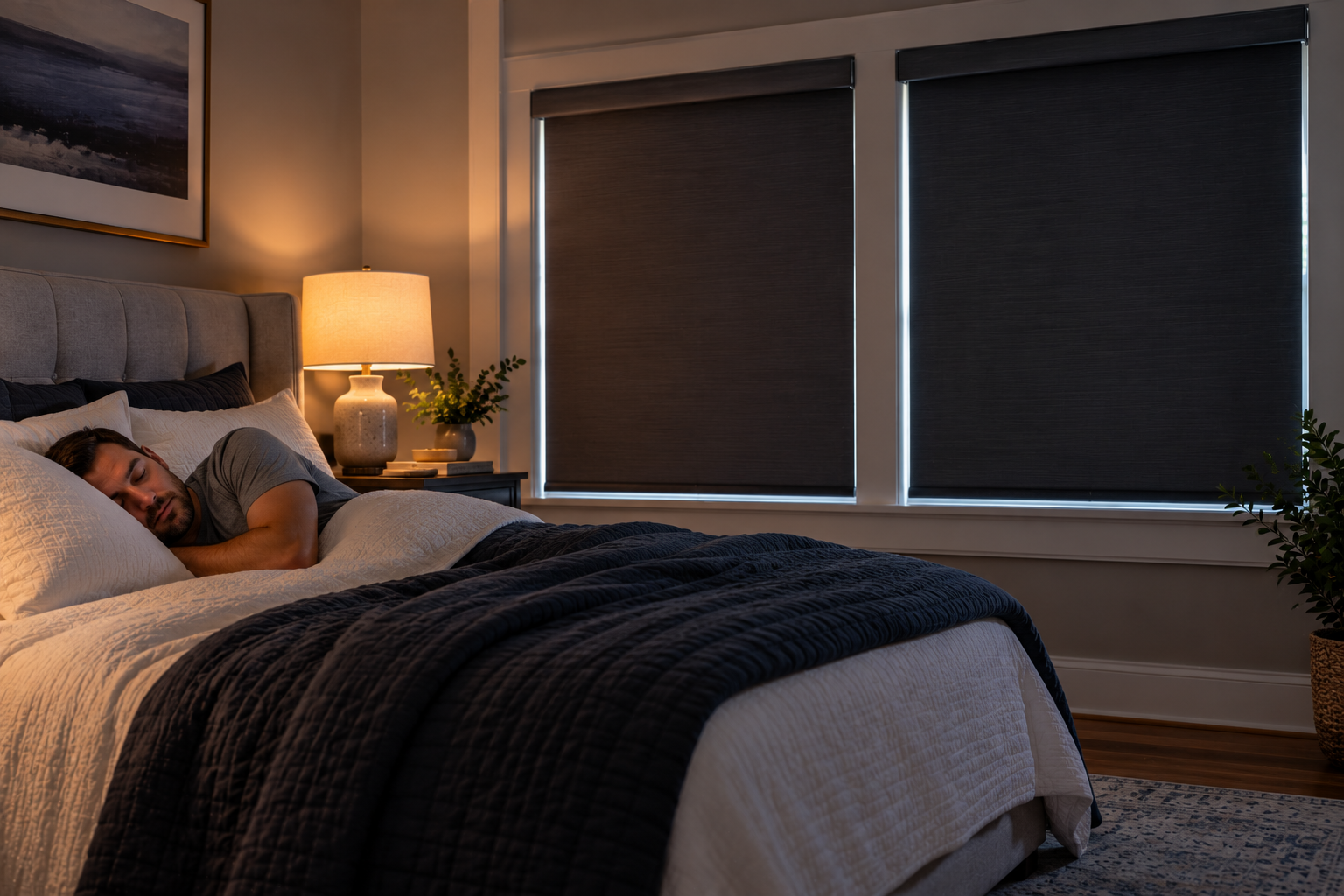
Yes. Shift workers are one of the groups most likely to benefit from stronger blackout performance because they may need to sleep while daylight is at its brightest.
For these rooms, fabric alone may not be enough.
Rachel may consider:
- Outside mounting
- Wider fabric coverage
- Room-darkening or blackout fabrics
- Side-channel systems
- Layered window treatments
- Motorized operation
- Existing light leakage around the window
Layering can also be useful.
A blackout shade combined with drapery may help reduce additional edge light while adding softness to the bedroom.
The important thing is to define the goal clearly.
"Dark enough for normal nighttime sleep" and "dark enough to sleep at 1:00 p.m. on a sunny July afternoon" are very different requirements.
What Are the Best Blackout Shades for Media Rooms?
Media rooms usually benefit from strong light control because even small amounts of glare can affect television and projector viewing.
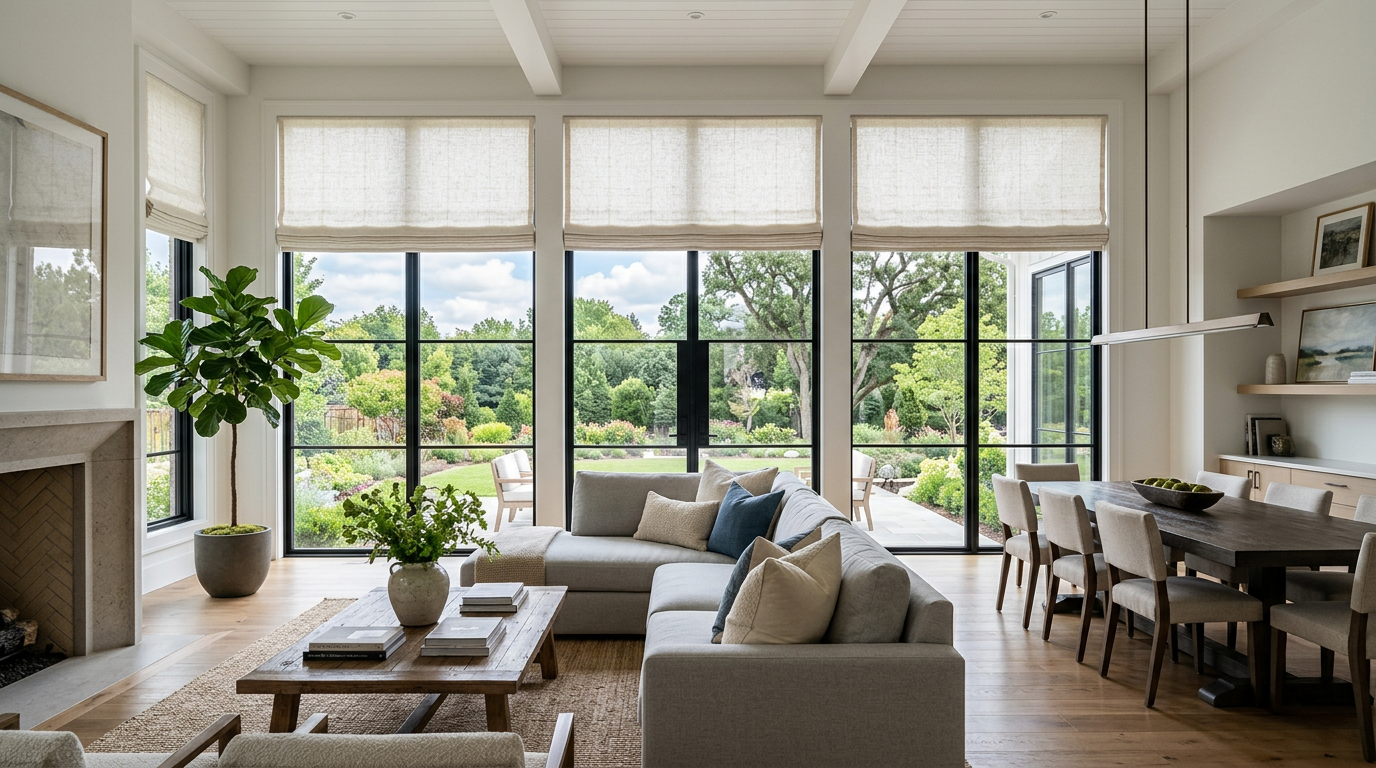
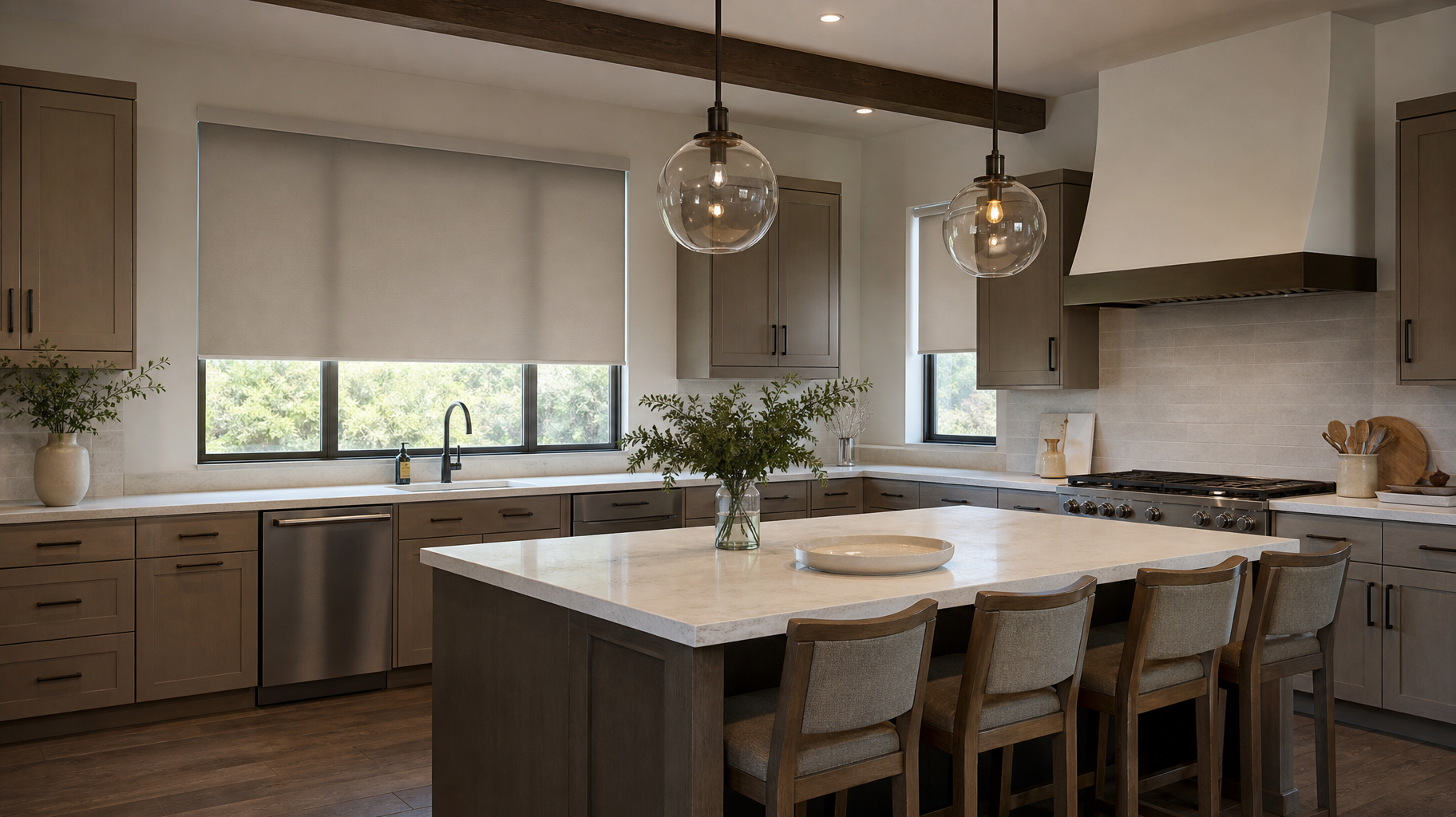
Blackout roller shades are often a natural option because their clean surface and simple profile work well with contemporary media spaces.
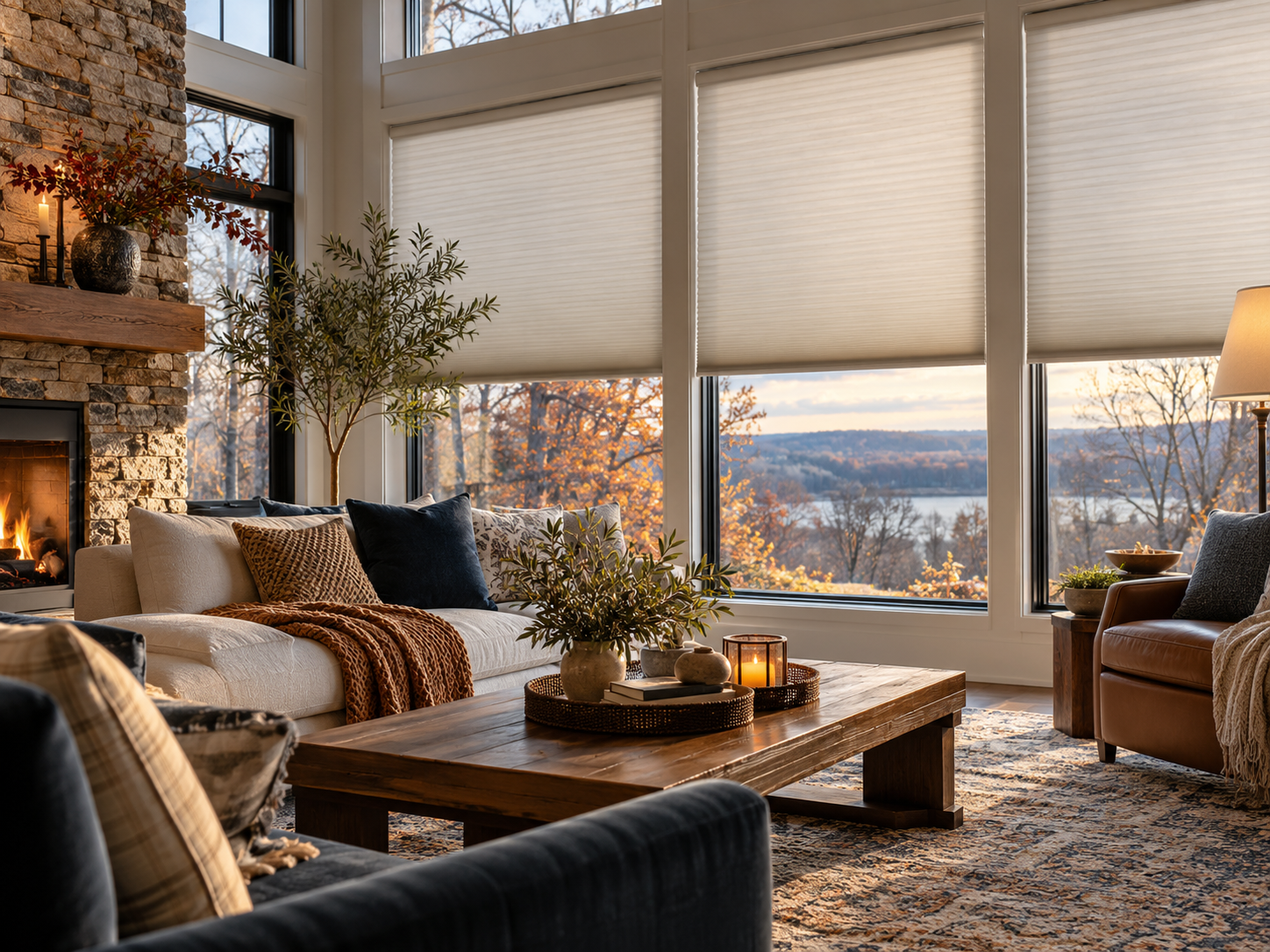
Cellular or honeycomb shades can also provide room darkening while adding an insulating layer at the window.
In some rooms, layered treatments may make sense.
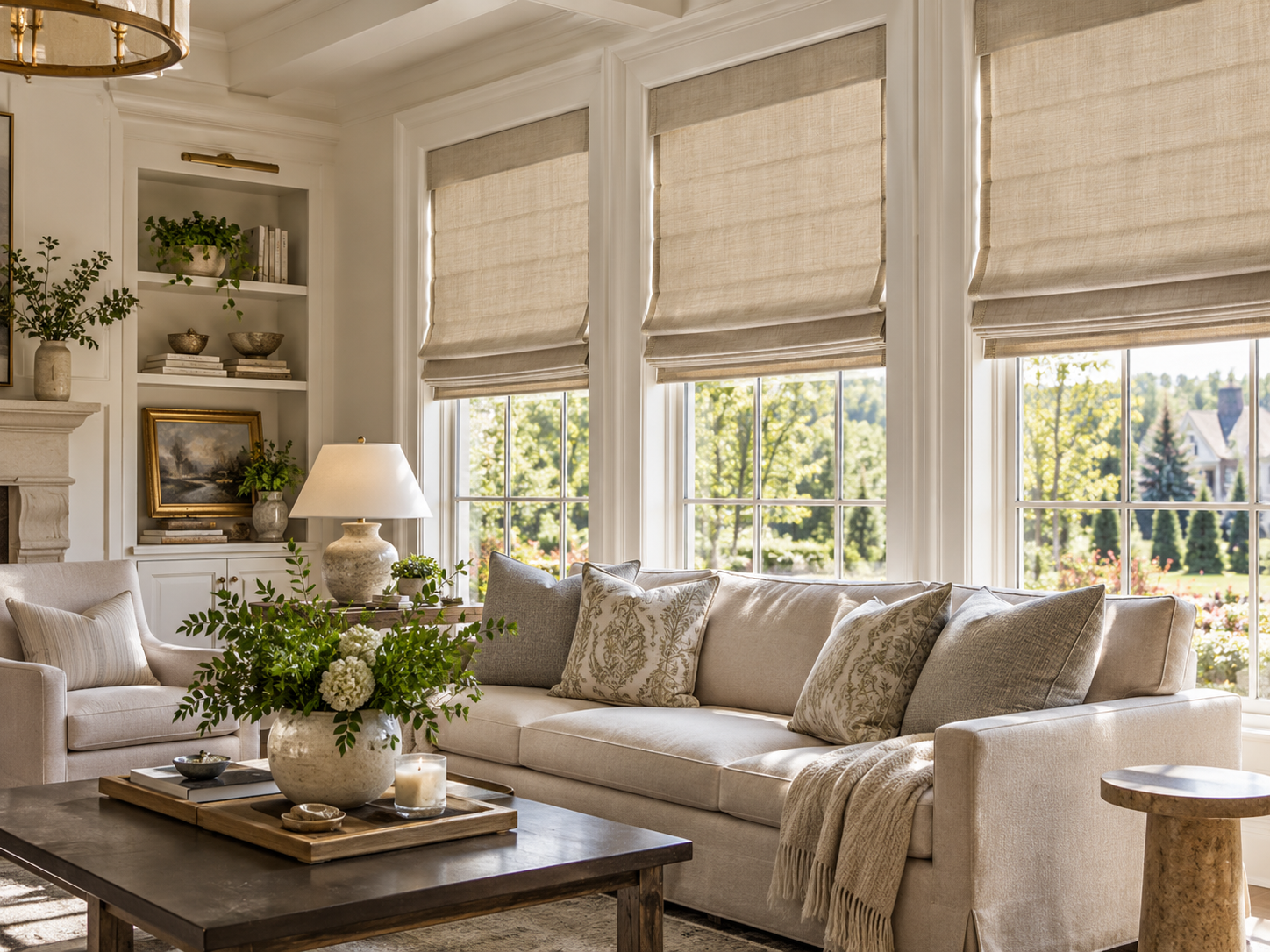
A blackout shade can handle functional light control while drapery softens the room acoustically and visually.
For a dedicated home theater, more specialized light-blocking systems may be appropriate.
The right answer depends on whether the homeowner wants:
- Better daytime television viewing
- Reduced glare
- Strong room darkening
- Near-total darkness
- Added privacy
- A more finished theater-like environment
The treatment should match the level of performance the room actually requires.

Can Motorized Blackout Shades Make Bedrooms More Convenient?
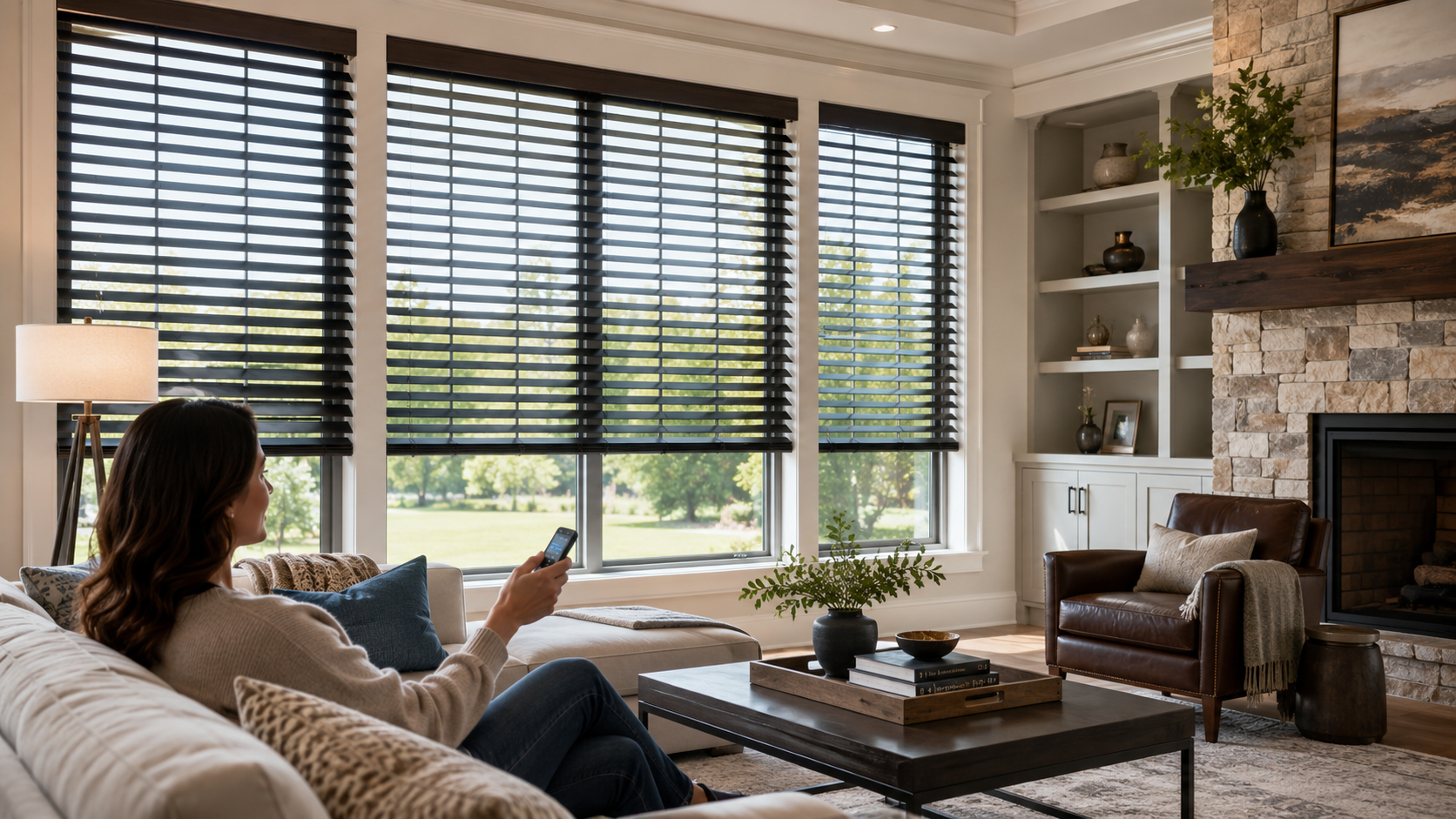
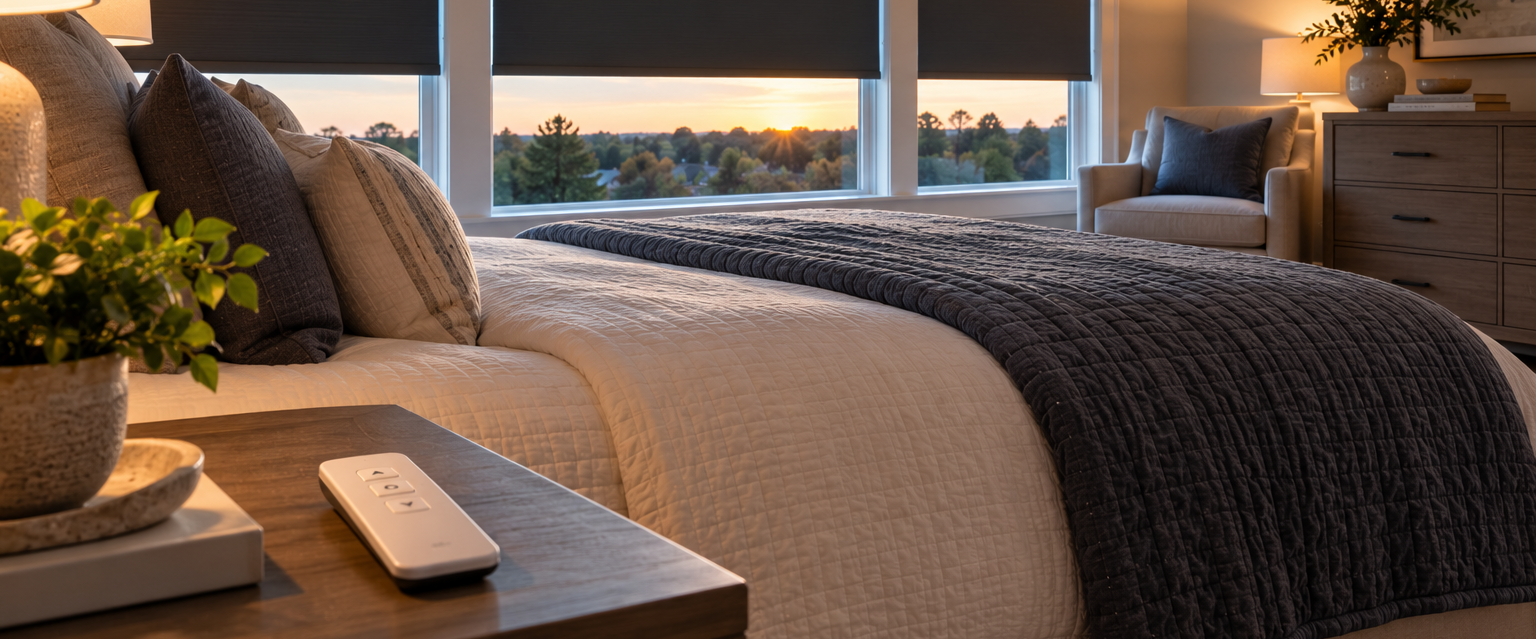
Yes. Motorized blackout shades can make bedrooms more convenient because the treatments can be adjusted without manually operating each window.
Depending on the compatible system, homeowners may be able to use:
- Remote control
- App control
- Scheduled operation
- Grouped shade control
- Smart-home integration
Scheduling can be particularly useful in bedrooms.
Shades might close automatically in the evening and open gradually as part of a morning routine.
Motorization can also be helpful for:
- Large bedroom windows
- Hard-to-reach windows
- Shades behind furniture
- Multiple windows in one room
- Nurseries
Motorization does not improve the blackout properties of the fabric itself.
Its benefit is making the treatment easier and more consistent to use.
What Norman® Shade Options Can NOVA Consider for Room Darkening?
NOVA Blinds, Shades & Shutters can also help homeowners compare Norman® shade options when stronger light control is a priority.
Soluna™ Roller Shades by Norman® offer fabric choices that can support different levels of light control, including room-darkening applications.
Roller shades can be especially effective when homeowners want a clean, contemporary treatment for bedrooms, media rooms, and larger windows.
Portrait™ Honeycomb Shades by Norman® provide another option. Their cellular construction can combine privacy, room darkening, and insulation in one treatment.
The better choice depends on the window and the room.
Rachel may recommend a roller shade when a clean profile and stronger light control are priorities, while a honeycomb shade may make more sense when insulation is also important.
The product comes after the performance goal.

Can Layered Window Treatments Make a Room Darker?
Yes. Layering can help reduce additional light around a window while also adding texture and design.
A blackout shade paired with drapery is one of the most common approaches.
The shade handles most of the direct light through the glass, while drapery can help cover portions of the window perimeter.
Layering works particularly well in:
- Primary bedrooms
- Nurseries
- Guest bedrooms
- Media rooms
- Formal bedrooms
- Large windows
It also creates more flexibility.
During the day, homeowners can open the drapery and use the shade alone. At night, both treatments can provide additional privacy and coverage.
The window coverings should be designed together so the finished window does not feel unnecessarily heavy.
Schedule Your Free In-Home Consultation
The biggest mistake homeowners can make with blackout curtains is assuming the word "blackout" on a fabric sample guarantees a completely dark room.
The fabric matters, but so do the window, mounting style, perimeter gaps, installation, and overall treatment design.
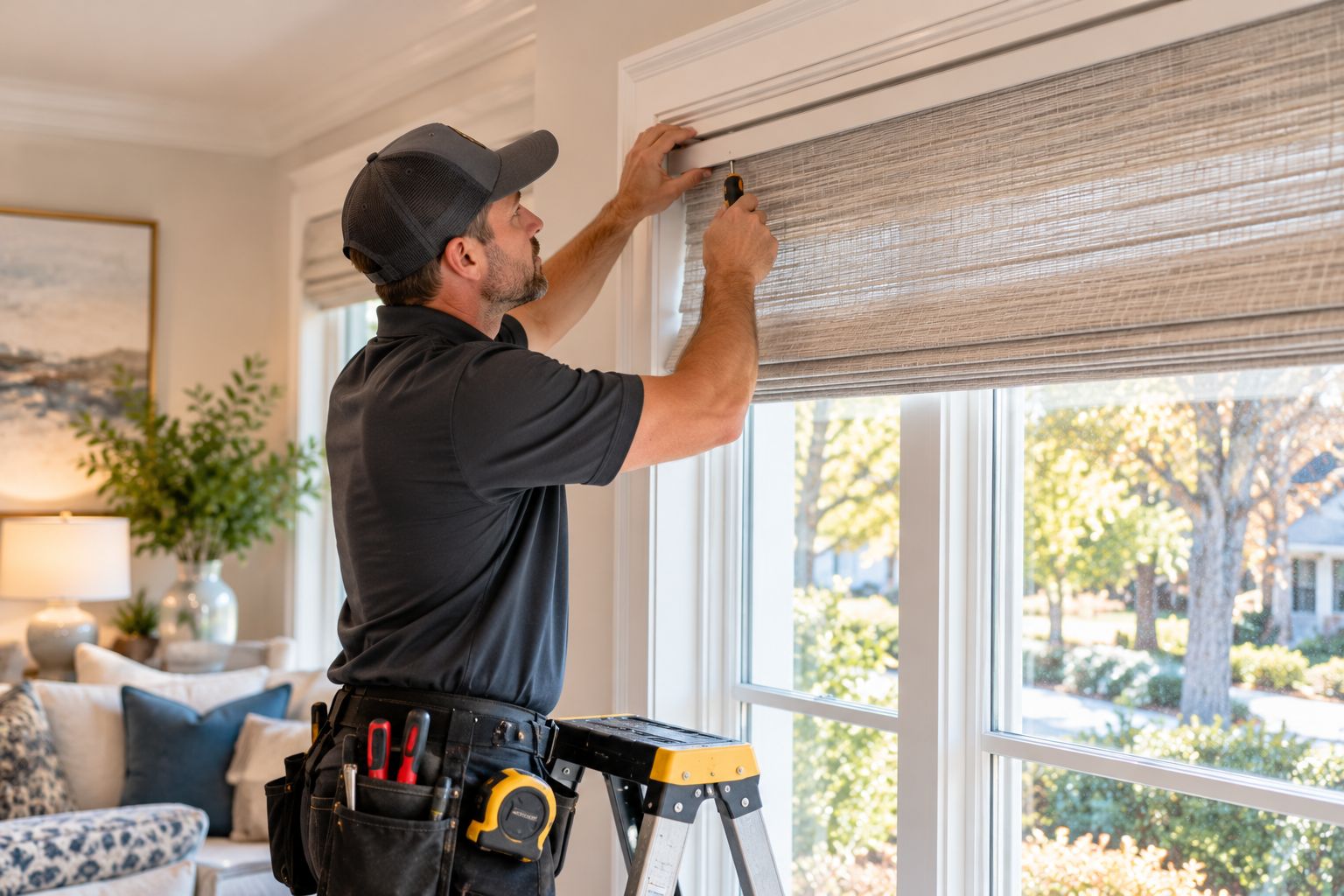
NOVA Blinds, Shades & Shutters can help Northern Virginia homeowners decide whether a room needs simple room darkening, blackout fabric, outside mounting, layering, or a more specialized light-control solution.
We'll bring manufacturer-level expertise directly to your home — no sales pitch, no pressure.
Schedule Your Free In-Home Consultation
Frequently Asked Questions About Blackout Shades
Q: Do blackout shades make a room completely dark?
A: Not necessarily. Blackout fabric can block light through the material, but daylight may still enter around the edges, top, or bottom of the treatment. Mounting style and window fit affect the final darkness.
Q: Are outside-mounted blackout shades darker than inside-mounted shades?
A: They can be because an outside mount can extend beyond the window opening and cover more of the perimeter. The amount of overlap and the specific window conditions still matter.
Q: What is the difference between blackout and room-darkening shades?
A: Room-darkening shades significantly reduce incoming light, while blackout fabrics are designed for stronger light blocking through the material. Neither term alone guarantees a completely dark room.
Q: Are blackout shades good for nurseries?
A: Yes. Blackout or room-darkening shades can help reduce daylight for naps and bedtime. Cordless or motorized operating systems are also worth considering in children's rooms.
Q: What are the best blackout shades for shift workers?
A: Shift workers may benefit from blackout fabric combined with wider coverage, outside mounting, layering, or specialized side-channel systems. The best setup depends on how much daytime light enters the room and how dark the sleeper needs it to be.
Q: Does NOVA Blinds, Shades & Shutters offer blackout shades?
A: NOVA offers custom shade options that can provide strong room darkening and blackout performance depending on the product and configuration. Rachel can help determine which combination of fabric, mount, and light-gap control best fits the room.