Energy-Efficient Window Treatments for Northern Virginia
Which Window Treatments Help Insulate Northern Virginia Homes?
Energy-efficient window treatments can help reduce heat transfer at the window, improve comfort near glass, and make rooms feel less drafty during Northern Virginia winters.
Rachel Brittain, co-founder of NOVA Blinds, Shades & Shutters, recommends looking at more than fabric thickness when choosing an insulating window treatment. Construction, fit, air pockets, window size, mounting style, and how consistently the treatment is used all affect performance.
For many homes, cellular or honeycomb shades are one of the strongest places to start.

Why Do Windows Feel Colder in Northern Virginia During Winter?
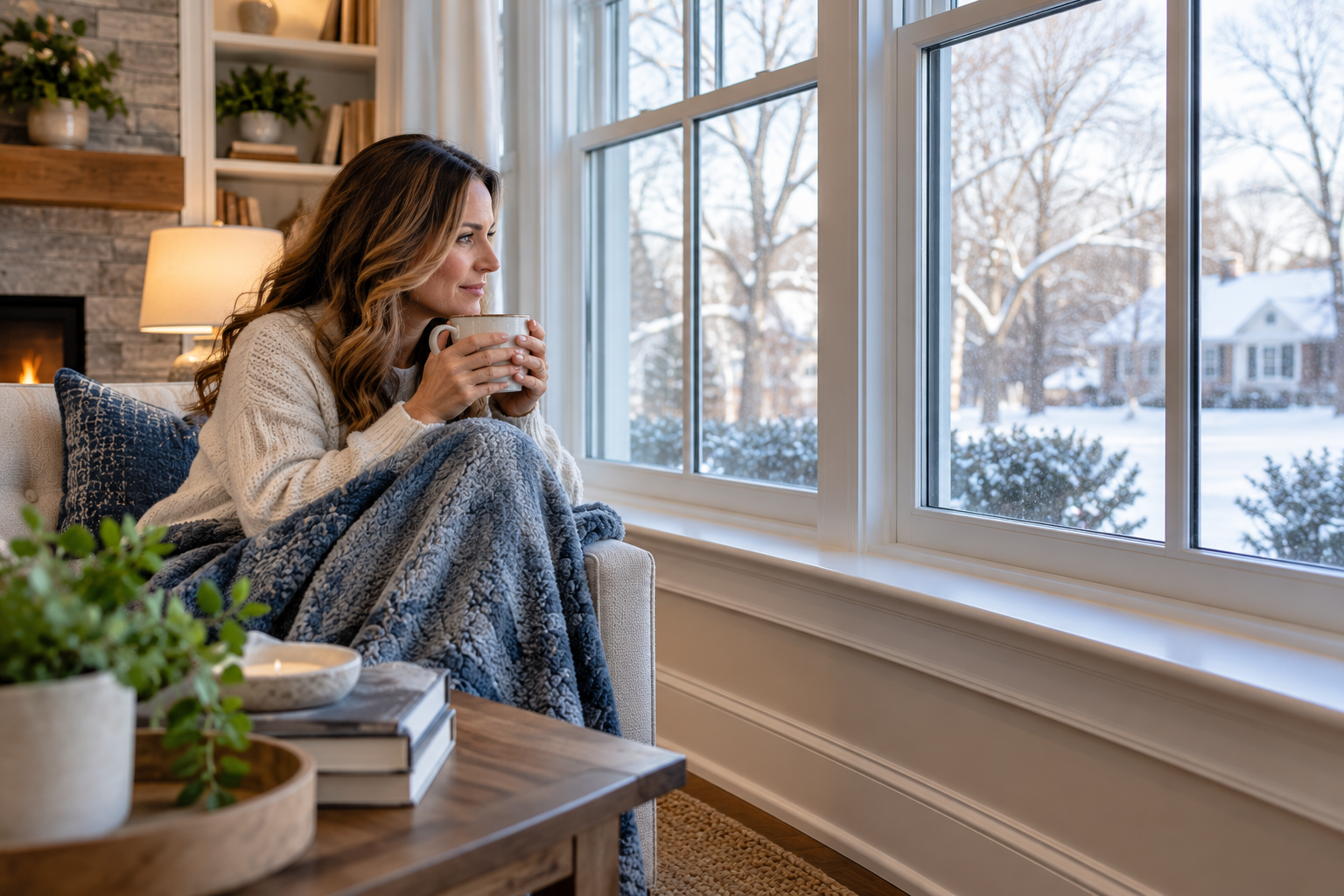
Windows can become one of the coldest surfaces in a room, especially when temperatures drop at night.
Even a high-quality window can feel noticeably cooler than an insulated wall. Older windows, large expanses of glass, and poorly sealed openings may create an even greater difference.
Homeowners often notice this as:
- Cold air near the window
- Rooms that feel cooler than the thermostat suggests
- Drafty seating areas
- Bedrooms that cool quickly at night
- Large windows that feel uncomfortable after sunset
- Temperature differences from one room to another
Window treatments cannot repair a failing window or replace proper weather sealing.
They can, however, create another layer between the room and the glass.
The right treatment can help slow heat transfer and make the space feel more comfortable.
Are Cellular Shades the Best Insulating Window Shades?
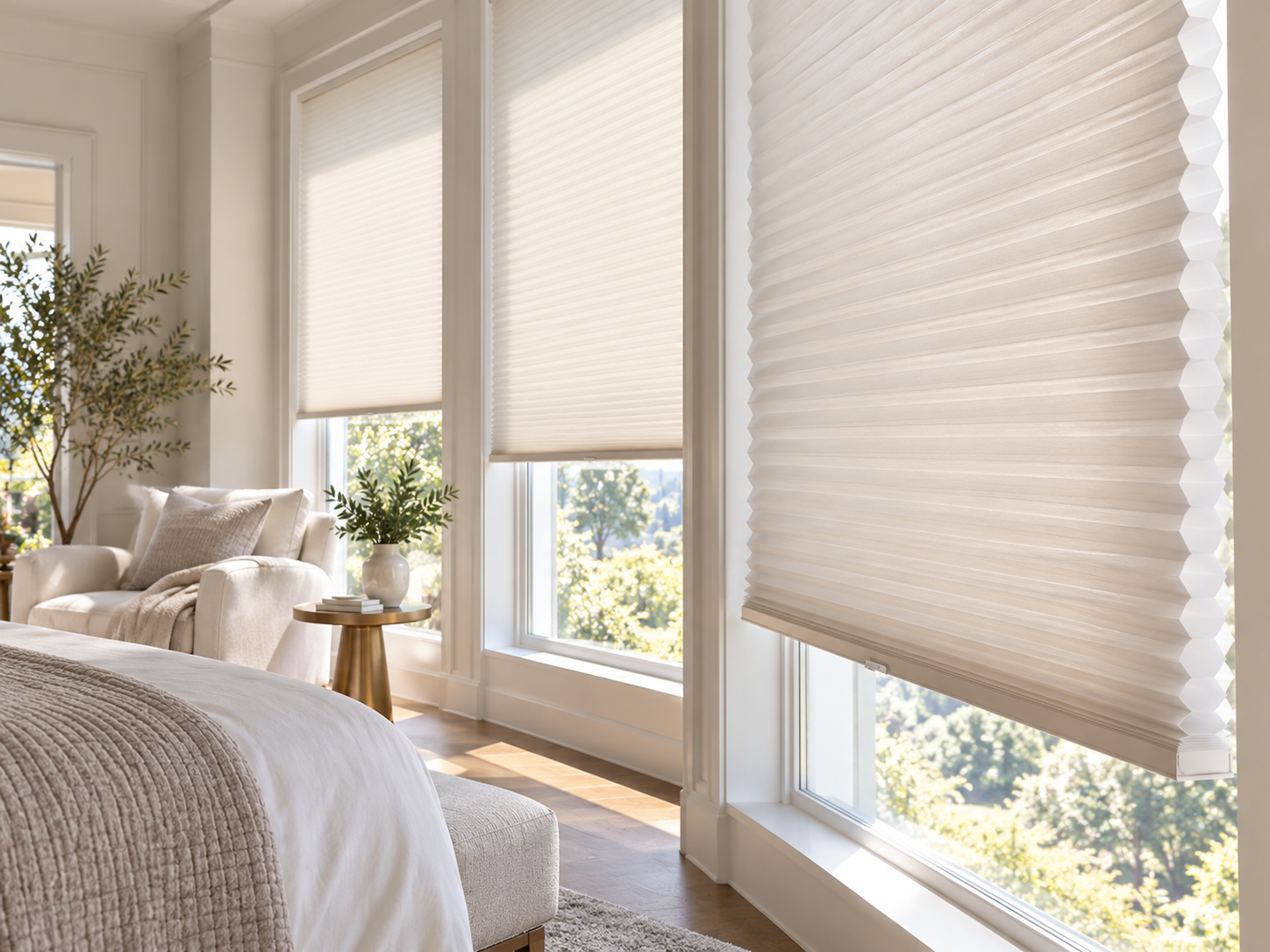
Cellular shades are one of the strongest window treatment options for insulation because their honeycomb construction creates air pockets between the room and the glass.
Those cells are what make this shade different from a simple flat fabric treatment.
The trapped air helps create another layer of resistance at the window.
Cellular shades can work particularly well in:
- Bedrooms
- Home offices
- Family rooms
- North-facing rooms
- Rooms with large windows
- Spaces that feel cold near the glass
- Whole-home energy-conscious projects
They can also provide light control and privacy, depending on the selected fabric.
Some homeowners know this category as honeycomb shades. The terms are often used interchangeably because the cellular structure resembles a honeycomb when viewed from the side.
For Northern Virginia homeowners looking for insulating window shades, this construction is more important than simply choosing the heaviest-looking fabric.

What Are Norman® Portrait™ Honeycomb Shades?
Portrait™ Honeycomb Shades by Norman® give NOVA homeowners a cellular shade option designed around the insulating honeycomb structure while also providing choices for privacy and light control.
The shade's cellular construction creates pockets of air between the interior room and the window.
That makes Portrait™ Honeycomb Shades especially relevant for homeowners who want a treatment
that addresses several needs at once:
- Winter comfort
- Privacy
- Filtered daylight
- Room darkening
- Clean design
- Flexible operation
The fabric and configuration still matter.
A bedroom may need stronger room darkening, while a living room may benefit from a lighter fabric that keeps the space bright during shorter winter days.
NOVA Blinds, Shades & Shutters helps homeowners choose the combination based on the room rather than treating every cellular shade as identical.
Do Interior Shutters Help With Winter Comfort?
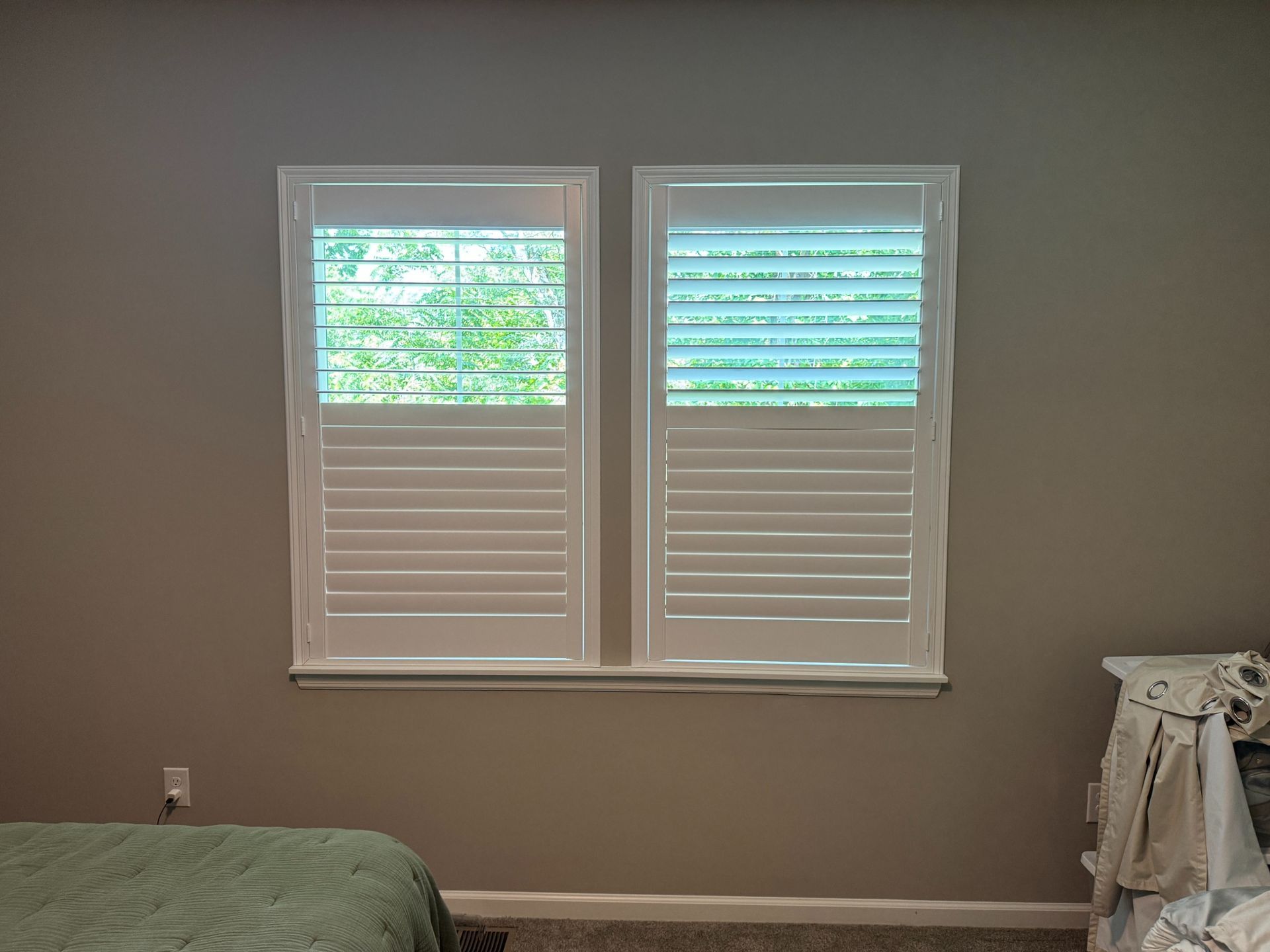
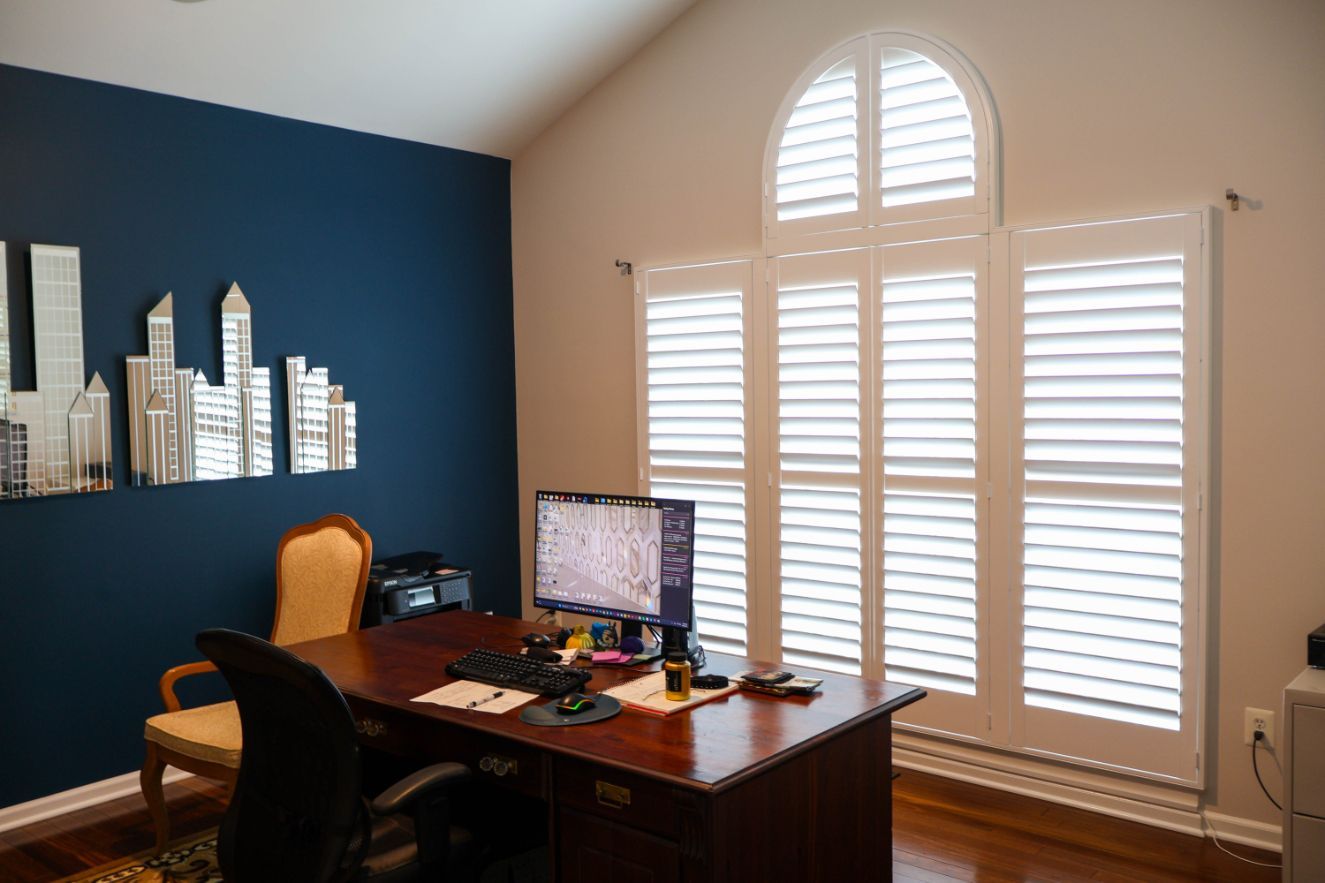
Interior shutters can provide another layer at the window and may help reduce the feeling of cold glass when the panels and louvers are closed.
Unlike fabric shades, shutters are a more substantial architectural treatment.
Their frames, panels, and adjustable louvers create a physical barrier between the room and the window.
That can make them appealing for:
- Bedrooms
- Living rooms
- Home offices
- Street-facing windows
- Rooms where privacy and insulation are both important
Plantation shutters can also allow homeowners to adjust the louvers during the day.
On a sunny winter afternoon, opening the louvers can allow beneficial sunlight into the room. After sunset, closing them provides privacy and another layer across the glass.
Material and fit both matter.
Wood and composite shutters behave differently, and the best choice depends on the room, humidity, window size, and desired appearance.

Can Layered Window Treatments Improve Winter Comfort?
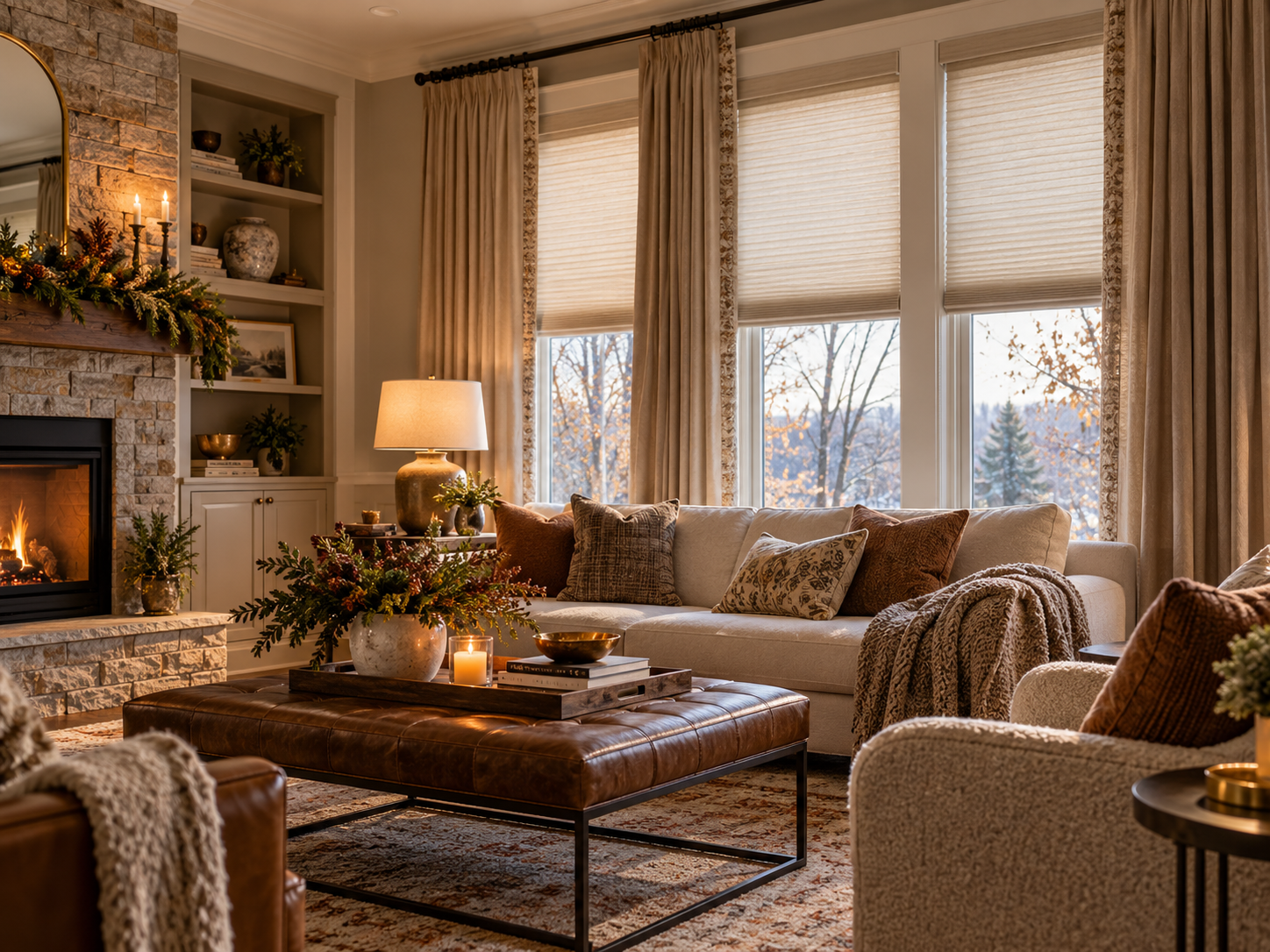
Layering can improve both comfort and design by adding more than one barrier at the window.
A shade paired with drapery is a common example.
The shade handles daily privacy and light control, while the fabric panels add softness and another layer around the window.
Layering can work particularly well in:
- Primary bedrooms
- Formal living rooms
- Dining rooms
- Large McLean or Great Falls windows
- Rooms with significant nighttime heat loss near the glass
The layers do not have to be heavy.
A cellular shade paired with decorative drapery can provide insulation without making the room feel overly formal.
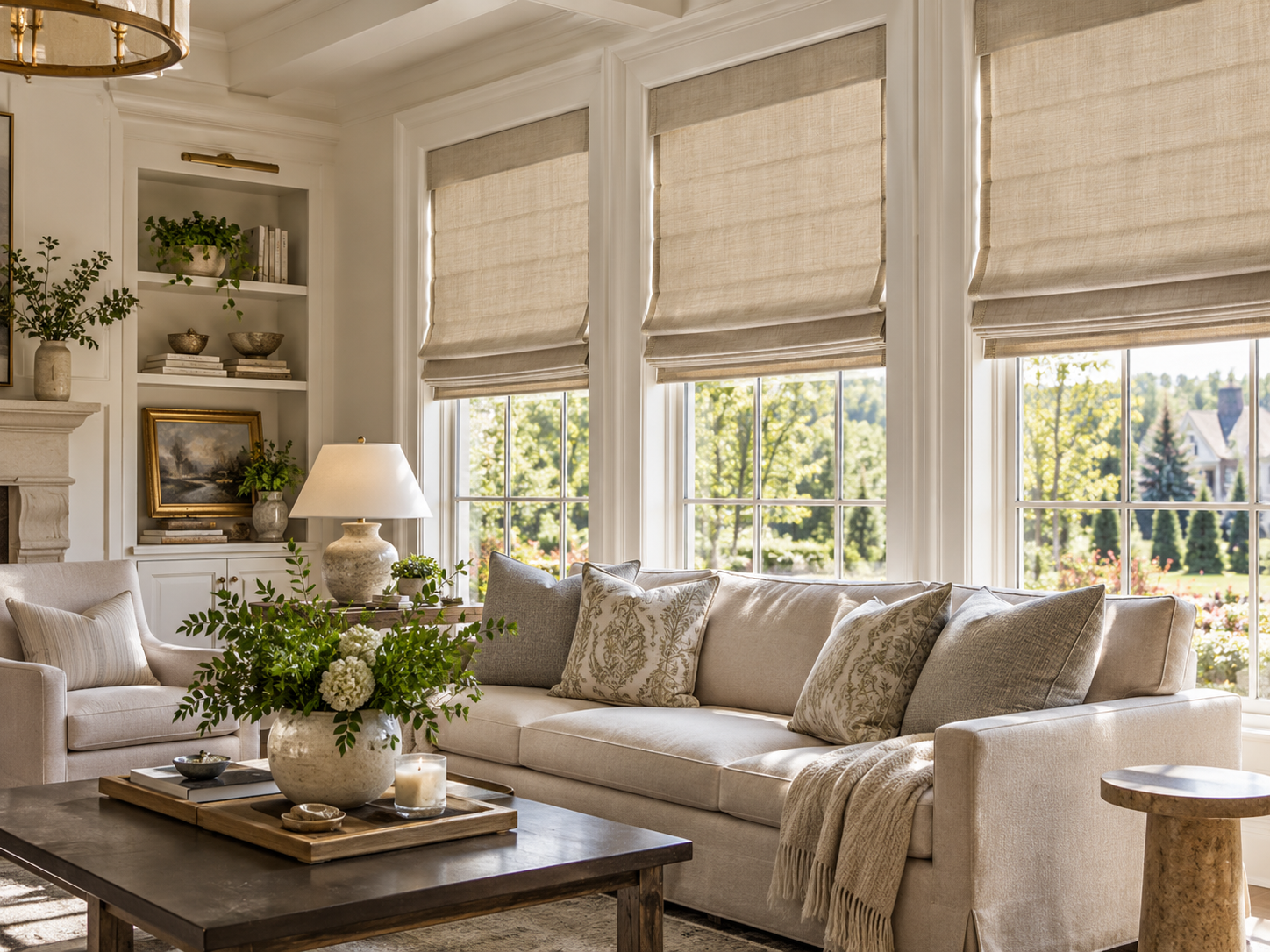
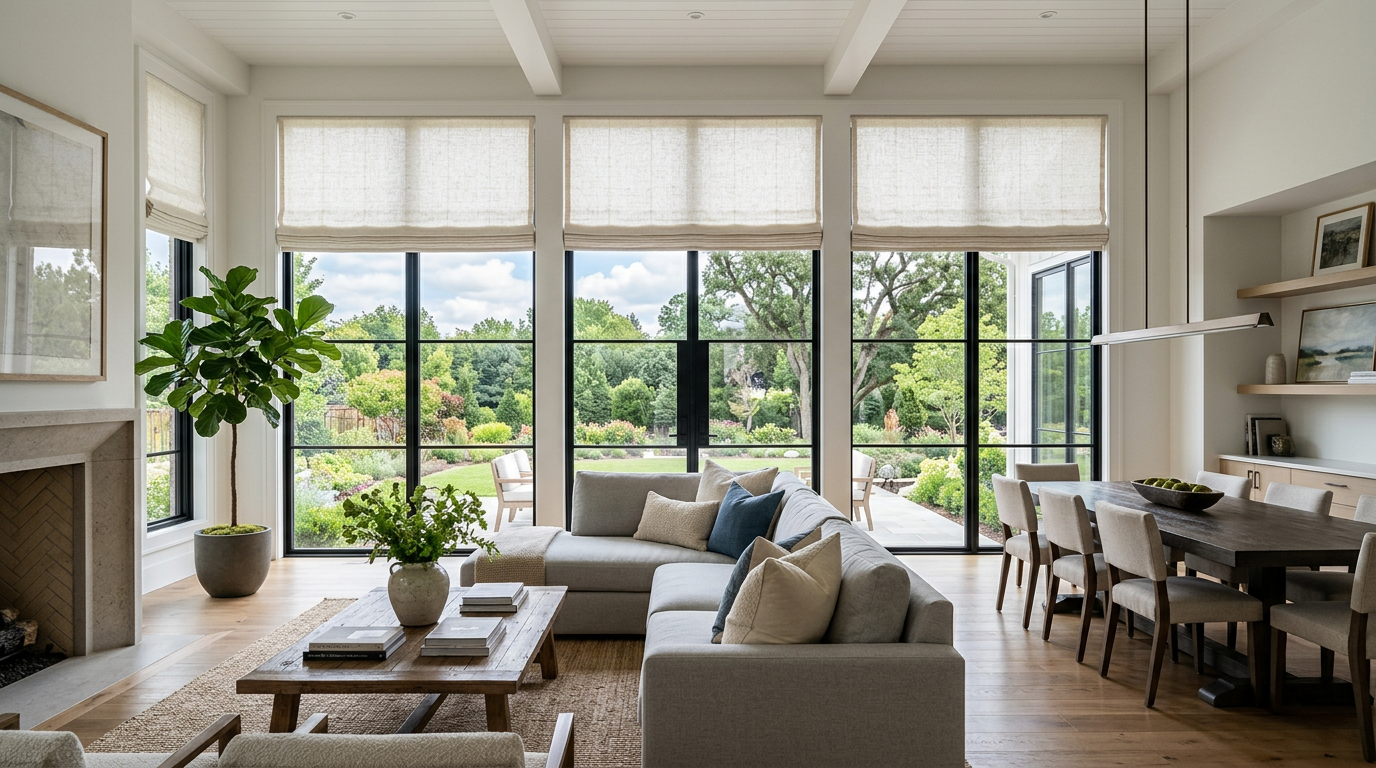
A Roman shade with side panels can create a softer, more traditional effect.
The important point is that the treatments should be planned together.
Too much fabric can overwhelm a smaller window, while a treatment that is too narrow may leave large areas of exposed glass.
Does Window Treatment Fit Affect Energy Efficiency?
Yes. Fit matters because a treatment can only create an effective barrier where it actually covers the window.
Large gaps around a shade allow more air movement between the room and the glass.
Mounting style can therefore influence performance.
An inside-mounted shade creates a clean appearance because it sits within the window opening. An outside mount can sometimes provide broader coverage around the perimeter.
Neither approach is universally better.
The right choice depends on:
- Window depth
- Trim
- Hardware
- Glass size
- Desired appearance
- Light gaps
- Privacy
- The selected product
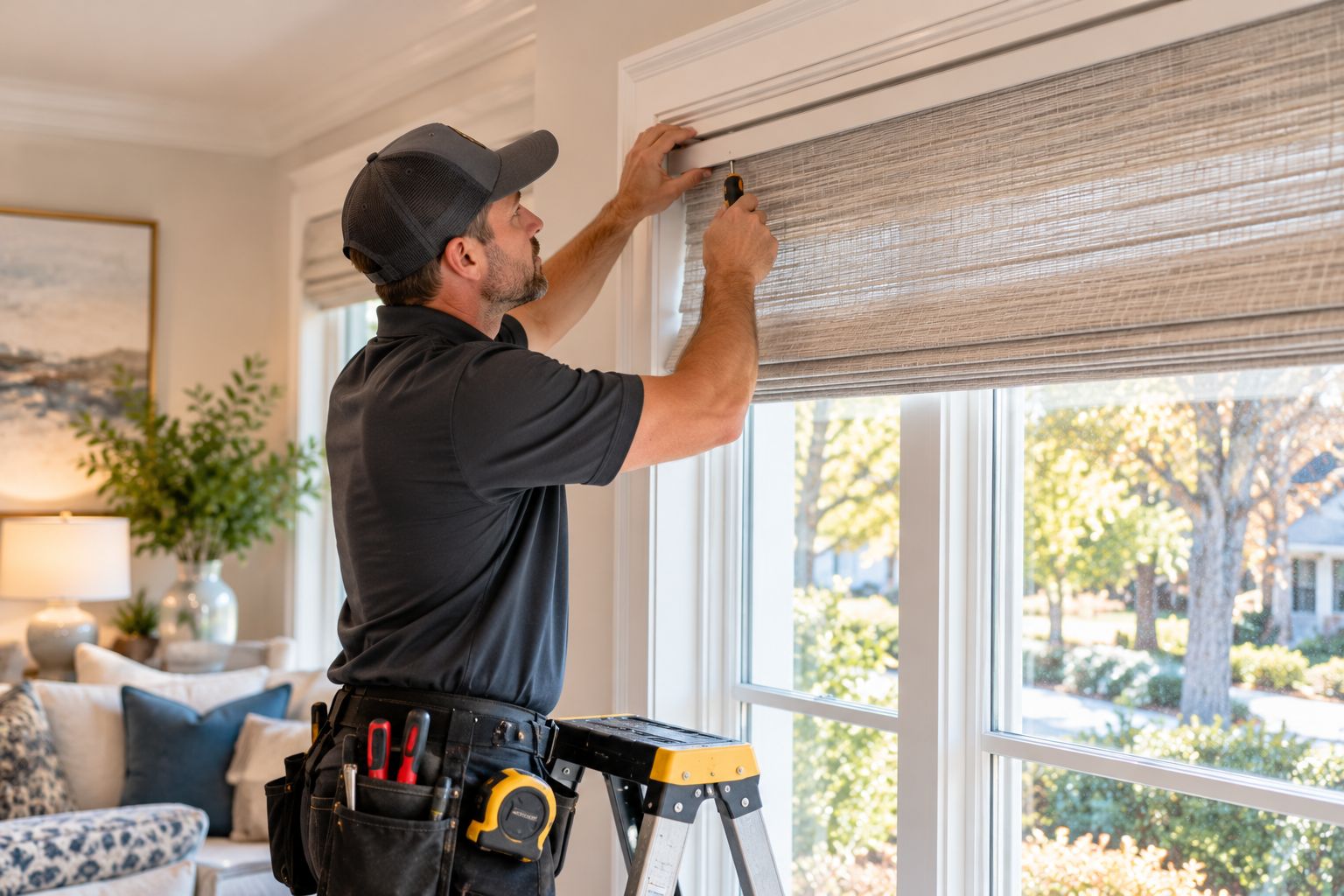
Professional measuring becomes particularly important when insulation is one of the homeowner's priorities.
A beautiful insulating shade that does not fit the opening correctly cannot perform as intended.

Does Fabric Opacity Affect Winter Performance?
Fabric opacity primarily affects light and privacy, but it can also influence how a window treatment feels and functions throughout winter.
A light-filtering cellular shade allows daylight into the room while maintaining the insulating cellular structure.
A room-darkening fabric provides stronger light control and may feel more substantial when closed.
The best choice depends on the space.
For example:
- A living room may benefit from light-filtering cellular shades.
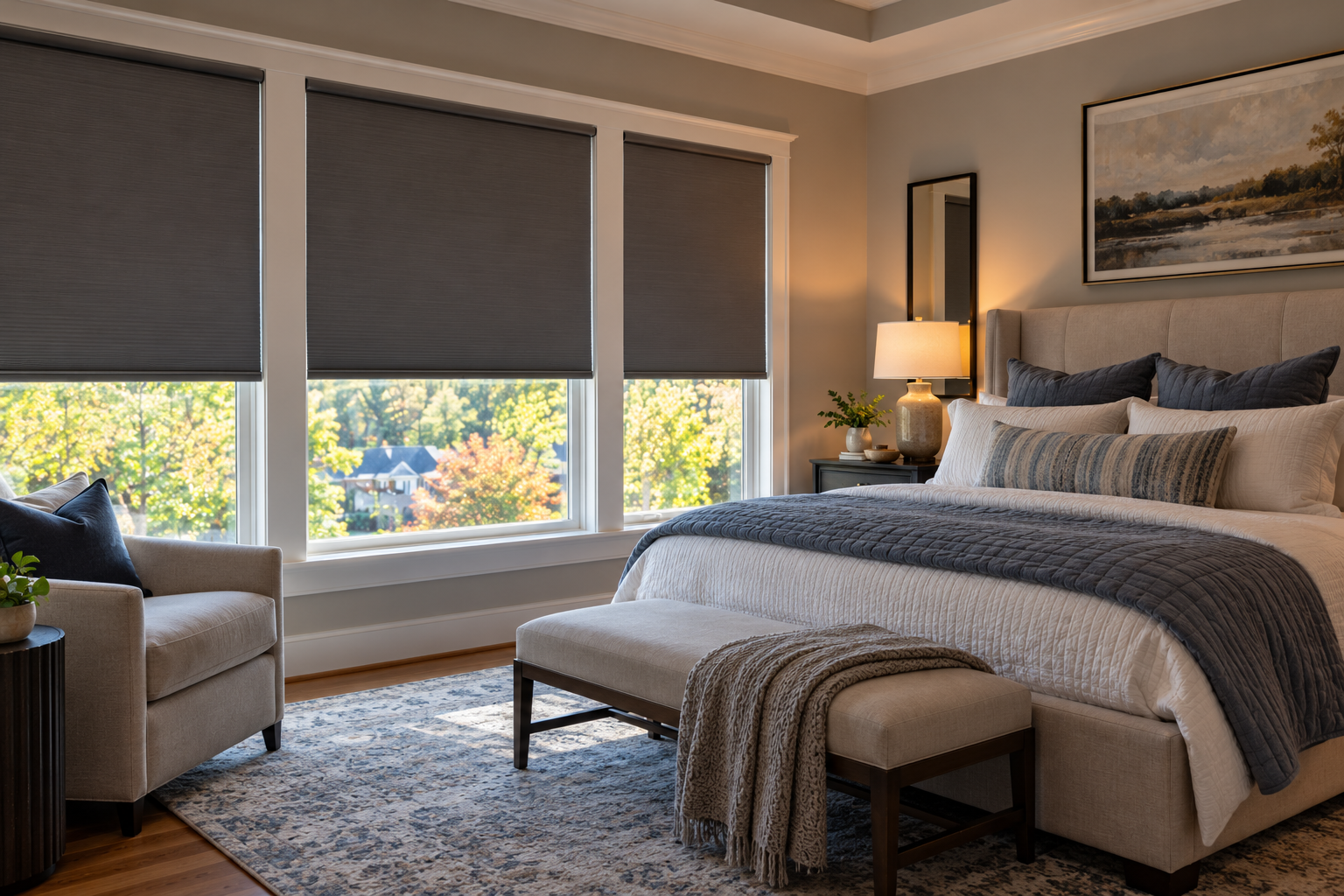
- A bedroom may need room-darkening honeycomb shades.
- A home office may need glare reduction without losing daylight.
- A nursery may need both stronger darkness and insulation.
Homeowners should not choose the darkest fabric simply because winter is approaching.
Northern Virginia winters also bring shorter days. Preserving useful daylight may be just as important as creating a barrier at night.
Can Motorized Shades Help With Winter Energy Efficiency?
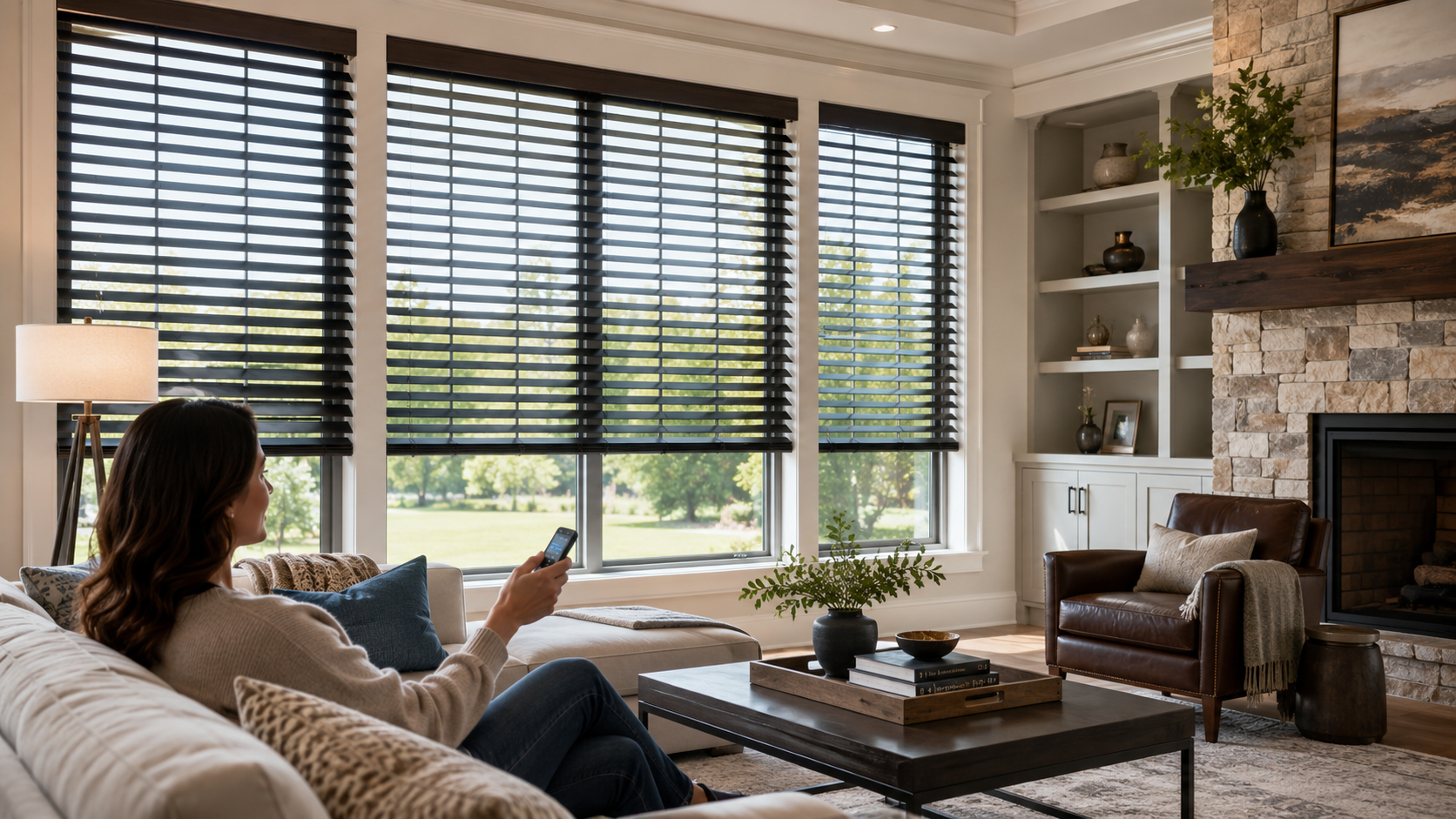
Motorized shades can make energy-conscious habits easier because homeowners can adjust compatible treatments on a schedule.
The benefit is consistency.
A shade only helps manage the window when it is being used.
Compatible motorized systems may allow shades to:
- Open during sunny winter mornings
- Take advantage of daytime natural light
- Close later in the afternoon
- Provide privacy automatically after sunset
- Cover difficult-to-reach windows consistently
This can be especially helpful on large windows or in homes where several treatments need adjustment each day.
For example, west-facing windows may benefit from remaining open during a sunny winter afternoon and closing as temperatures fall after sunset.
Motorization does not make the fabric itself more insulating.
It simply makes it easier to use the window treatment strategically.
Rachel recommends automation when it improves the homeowner's routine rather than adding it to every window automatically.

Schedule Your Free In-Home Consultation
Energy-efficient window treatments work best when the product, fabric, fit, and operating method are matched to the actual window.
Ready to make your Northern Virginia home more comfortable as temperatures fall? Rachel and the NOVA team can help you compare honeycomb shades, shutters, layered treatments, and motorized options based on the needs of each room.
We'll bring manufacturer-level expertise directly to your home — no sales pitch, no pressure.
Schedule Your Free In-Home Consultation
Frequently Asked Questions About Energy-Efficient Window Treatments
Q: What are the most energy-efficient window treatments?
A: Cellular or honeycomb shades are among the strongest options because their cell structure traps air between the room and the glass. Shutters and layered window treatments can also help create additional barriers at the window.
Q: Do cellular shades really help insulate windows?
A: Yes. Their honeycomb construction creates air pockets that help reduce heat transfer through the window area. Fit, cell design, and how consistently the shades are used all influence the overall effect.
Q: Are honeycomb shades and cellular shades the same thing?
A: The terms are commonly used for the same general shade category. Both describe shades built with cellular pockets that resemble a honeycomb when viewed from the side.
Q: Do plantation shutters help keep a room warmer?
A: Interior shutters can add another layer between the room and the glass when the panels and louvers are closed. They also provide adjustable privacy and light control throughout the day.
Q: Can motorized shades help during winter?
A: Motorization can help by making it easier to open and close shades consistently as sunlight and temperatures change. The motor does not increase insulation, but scheduling can help homeowners use the treatment more effectively.