
Top-Down Bottom-Up Shades in Northern Virginia

Nova Blinds Shades Shutters • November 11, 2026

Share this article

Are Top-Down/Bottom-Up Shades Right for Northern Virginia Homes?


Top-down/bottom-up shades are ideal for homeowners who want privacy without covering the entire window. Instead of operating only from the bottom, these shades can be lowered from the top, raised from the bottom, or positioned between the two.


That flexibility solves a common problem in Northern Virginia homes: how do you block the view into a room while still letting natural light come through the upper portion of the window?


Rachel Brittain, co-founder of NOVA Blinds, Shades & Shutters, often considers top-down/bottom-up shades when privacy and daylight are equally important. They can be particularly useful in bedrooms, bathrooms, first-floor living areas, home offices, townhomes, and street-facing rooms.


The key is choosing the right fabric, fit, and operating system for the window.


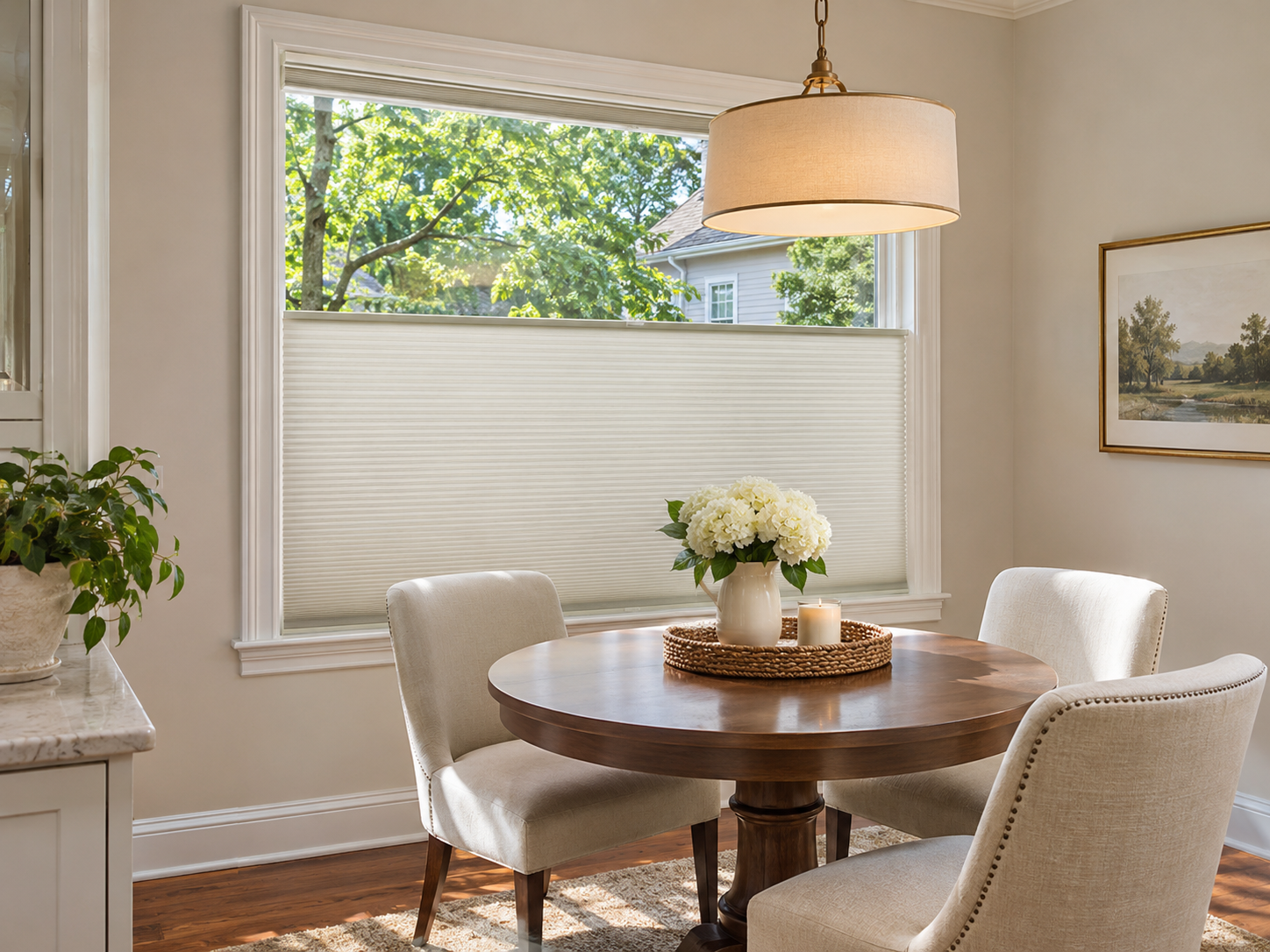
Bright dining nook with round wooden table, upholstered chairs, floral centerpiece, and a large window with cellular shades

What Are Top-Down/Bottom-Up Shades?


Top-down/bottom-up window shades are window treatments that can be adjusted from both the top and bottom of the window.


A standard shade generally raises from the bottom.


With a top-down/bottom-up configuration, homeowners gain another option: lowering the top portion while keeping the bottom of the window covered.


That means you can create privacy at eye level while allowing daylight through above.


For example, a homeowner might keep the lower two-thirds of a street-facing window covered while leaving the upper third open.


This can be useful when you want:


  • Privacy from neighbors or sidewalks
  • Natural light during the day
  • A view of the sky or treetops
  • Less glare without completely darkening the room
  • Flexible coverage as privacy needs change


For many homeowners, that adaptability is the main reason to consider this type of custom shade.


How Do Top-Down/Bottom-Up Shades Provide Privacy Without Blocking Natural Light?


Top-down/bottom-up shades provide privacy by covering the portion of the glass where outside views are most likely while leaving the upper portion exposed.


That is particularly useful on first-floor windows.


Imagine a living room facing a sidewalk in Arlington. Keeping the lower part of the window covered can limit direct views into the room while the open upper portion still brings in daylight.


The same concept works in:


  • Alexandria townhomes
  • Street-facing Fairfax bedrooms
  • Vienna home offices
  • Bathrooms with neighboring properties nearby
  • First-floor living spaces throughout Northern Virginia


This approach can feel much more open than closing a conventional shade from top to bottom.


It also allows privacy to change throughout the day.


A homeowner may lower the top during daylight hours and then close the treatment more fully once the sun goes down.


That flexibility is what separates top-down/bottom-up shades from many standard window coverings.


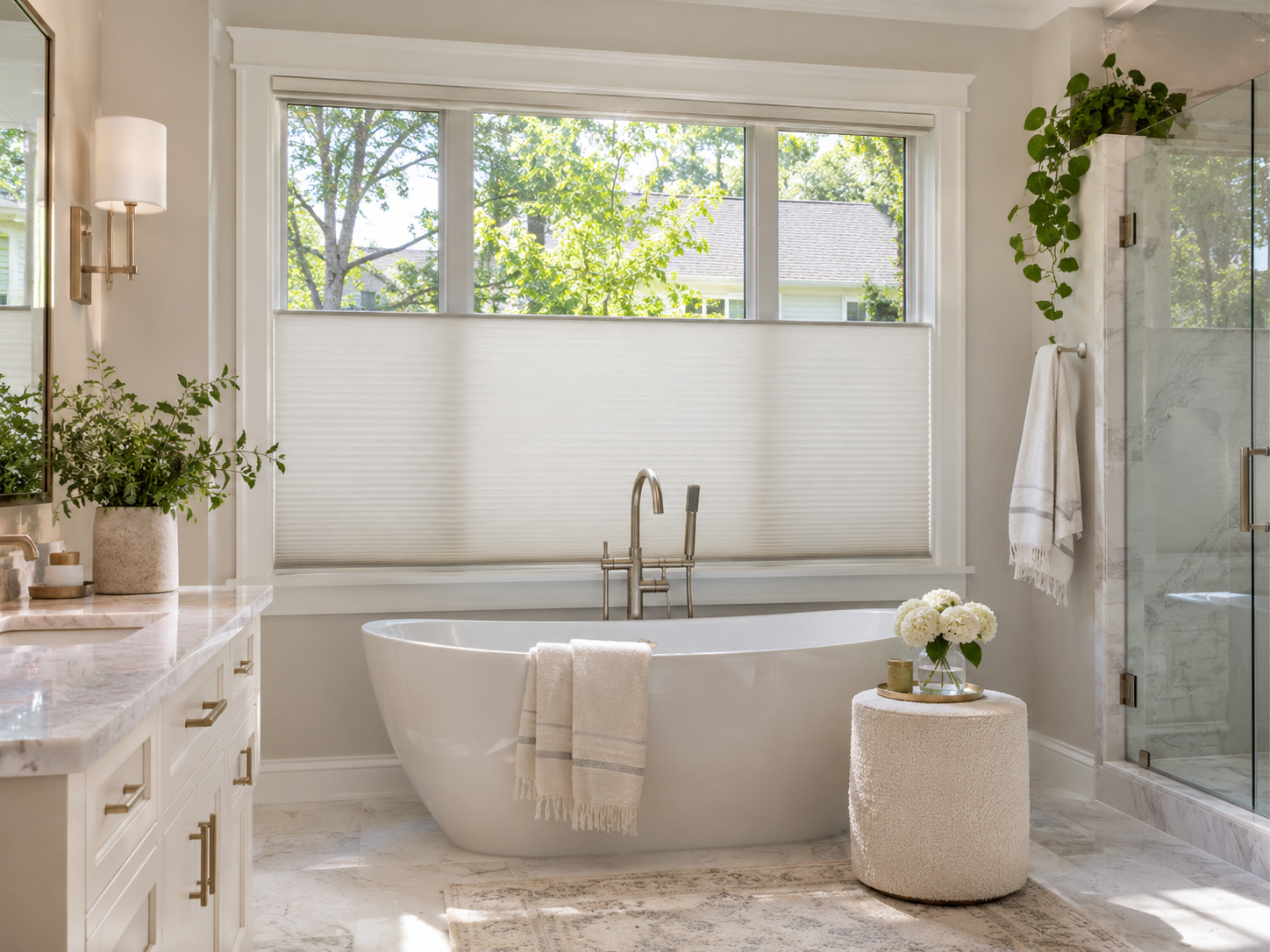
Bright modern bathroom with a freestanding tub, glass shower, marble vanity, and large windows with honeycomb shades

Where Do Top-Down/Bottom-Up Shades Work Best?


Top-down/bottom-up shades work best in rooms where privacy is important but completely covering the window feels unnecessary.


First-Floor Living Rooms


Street-facing living rooms are one of the most natural applications.


Homeowners can cover the portion of the window visible from the sidewalk while preserving daylight above.


Bedrooms


Bedrooms often need privacy throughout the day, particularly when they face neighboring homes.


A top-down/bottom-up shade can provide coverage without making the room feel closed off.


Bathrooms


Bathrooms may be one of the strongest applications because the privacy requirement is so specific.


The lower portion of the window can remain covered while daylight enters from above.


Fabric and material selection still matter in rooms exposed to moisture.


Home Offices


Top-down/bottom-up shades can also help control distractions and privacy without eliminating natural light during the workday.


Townhomes


Northern Virginia townhomes often sit relatively close to neighboring properties.


Homes in Arlington, Alexandria, Fairfax, and parts of Vienna can benefit from adjustable coverage that responds to changing sightlines throughout the day.


Are Top-Down/Bottom-Up Cellular Shades a Good Choice?


Yes. Cellular or honeycomb shades are one of the most common and practical ways to get top-down/bottom-up operation.


Cellular shades use fabric formed into honeycomb-shaped cells.


For this particular blog, however, their biggest advantage is not insulation. It is the combination of:


  • Flexible privacy
  • Soft filtered light
  • A clean appearance
  • Multiple opacity choices
  • Top-down/bottom-up operation on compatible systems


Homeowners can choose lighter fabrics when preserving daylight is the priority or more opaque fabrics when stronger privacy is needed.


A bedroom may need a different fabric from a living room.


Likewise, a bathroom shade may need to balance privacy with the room's environmental conditions.


NOVA Blinds, Shades & Shutters can help homeowners compare cellular shade options based on how the room will actually be used rather than choosing fabric from a sample alone.


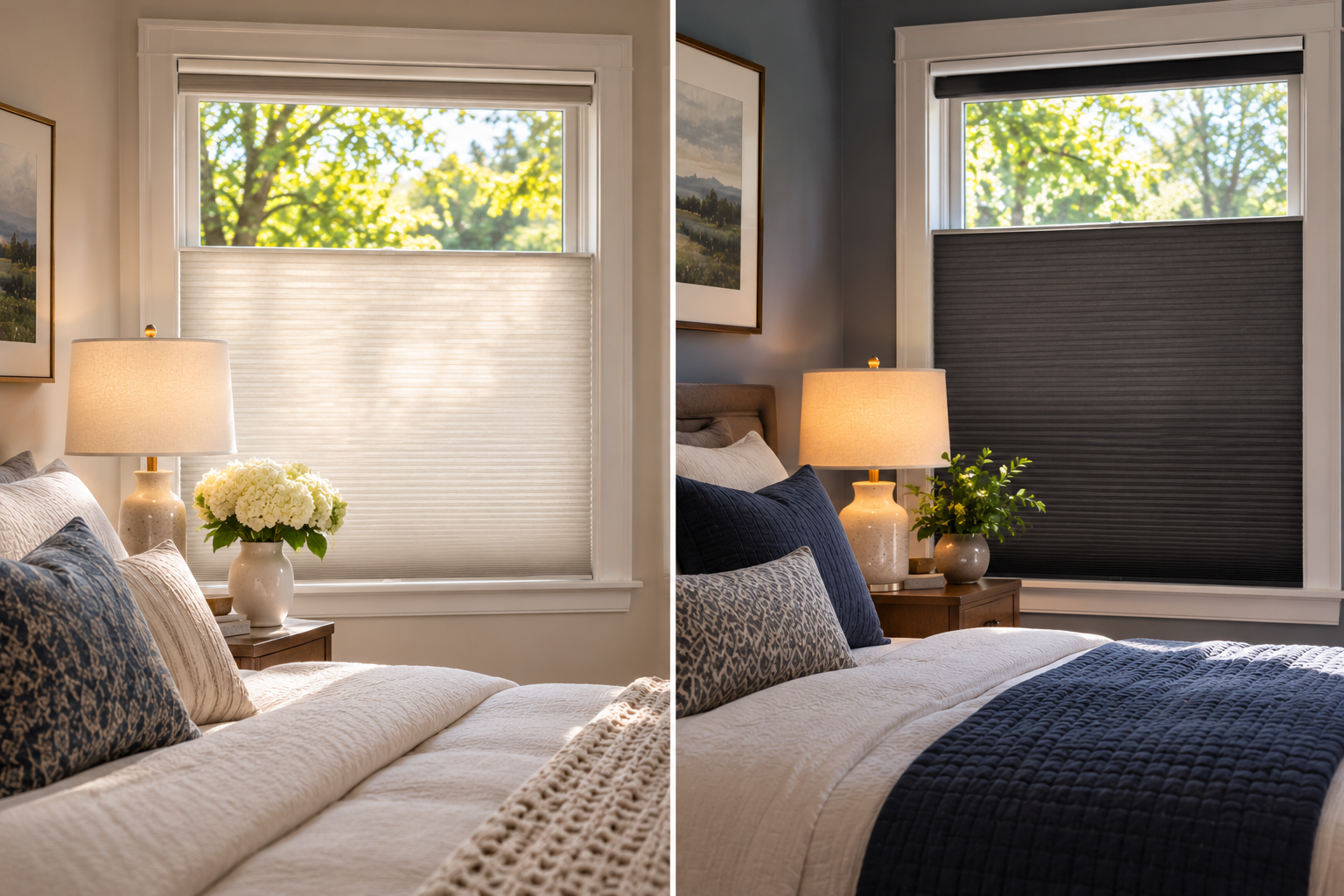
Bedroom window with white and blackout cellular shades, showing a bright outdoor view.

Should You Choose Light-Filtering or Room-Darkening Top-Down/Bottom-Up Shades?


Choose light-filtering fabric when daylight is the priority and room-darkening fabric when stronger light reduction and privacy are more important.


Light-Filtering Shades


Light-filtering fabrics soften incoming sunlight while keeping a room brighter.


They can work especially well in:


  • Living rooms
  • Dining areas
  • Home offices
  • Kitchens
  • Bathrooms where appropriate


They are often a natural match for the top-down/bottom-up concept because the homeowner is specifically trying to preserve natural light.


Room-Darkening Shades


Room-darkening fabrics reduce substantially more incoming light.


They may make more sense in:


  • Bedrooms
  • Nurseries
  • Guest rooms
  • Rooms affected by strong morning or afternoon sun


Privacy should also be evaluated after dark.


A shade that feels private during the day may behave differently once interior lights are on. Rachel recommends considering nighttime conditions before settling on a fabric.


Are Top-Down/Bottom-Up Shades Better Than Regular Shades?


They are better when adjustable privacy is one of the homeowner's main goals, but a standard shade may be simpler when that flexibility is unnecessary.


Top-down/bottom-up shades are particularly useful when homeowners frequently think:


“I want this part of the window covered, but I still want light above it.”


If that problem does not exist, a conventional shade may work perfectly well.


For example, a second-floor guest bedroom with no privacy concerns may not benefit much from the added operating flexibility.


A first-floor bathroom facing a neighboring property is a very different situation.


This is why Rachel does not recommend an upgraded operating style simply because it is available.

The window should justify it.


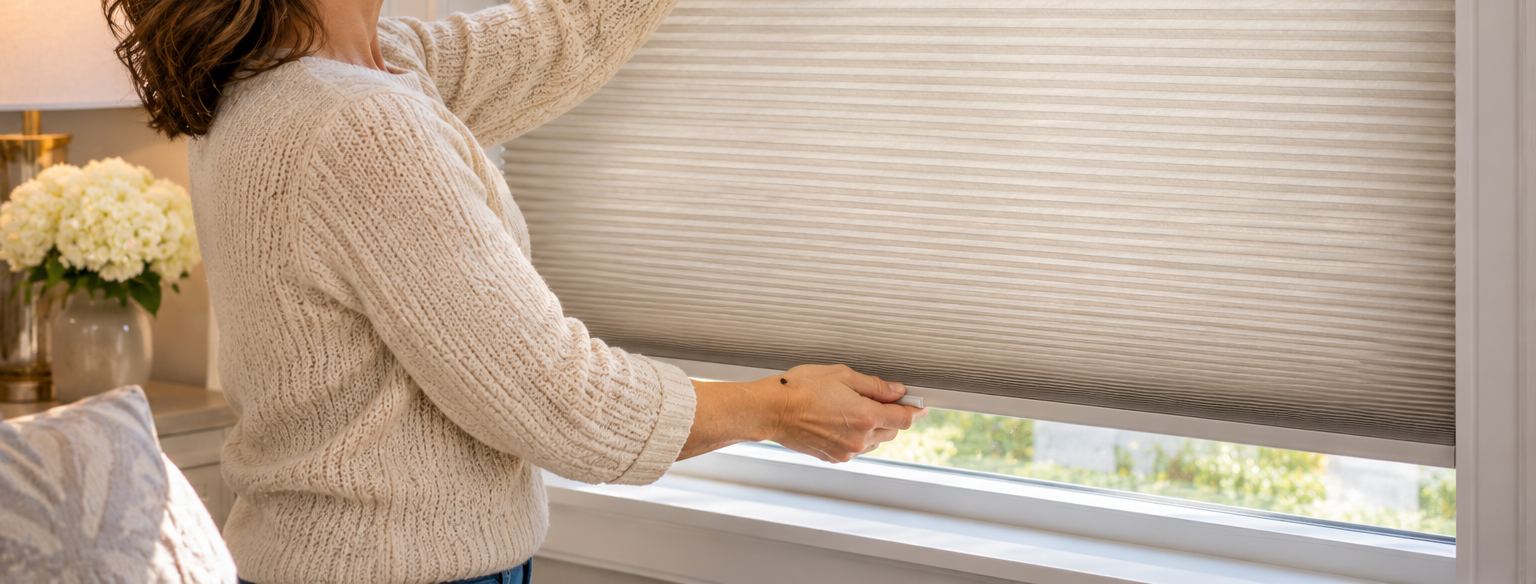
Person lowering a beige window cellular shade in a bright room

Are Top-Down/Bottom-Up Shades Cordless?


Cordless top-down/bottom-up configurations are available for compatible shade systems.


That can create a clean appearance while making the treatment easy to adjust without traditional dangling lift cords.


Cordless operation is especially worth considering in:


  • Children's bedrooms
  • Nurseries
  • Family rooms
  • Homes with pets
  • Frequently used windows


The exact operating system depends on the selected product.


Homeowners should compare how easily the shade moves, how the top and bottom sections are adjusted, and whether the mechanism feels intuitive for everyday use.


A treatment that offers useful functionality should still be easy to operate.


What Should You Look for Before Buying Top-Down/Bottom-Up Shades?


Before buying top-down/bottom-up shades, homeowners should consider privacy, fabric opacity, window depth, mounting style, operation, and the view they want to preserve.


Ask these questions before ordering:


  • Which part of the window needs privacy?
  • Do you want light-filtering or room-darkening fabric?
  • Is nighttime privacy important?
  • Does the window have enough depth for the preferred mount?
  • Will the shade be adjusted frequently?
  • Is cordless operation important?
  • Are several shades being installed next to each other?
  • Does the treatment need to coordinate with existing blinds or shades?


Window proportions matter too.


A treatment that looks balanced on a tall bedroom window may feel different on a short, wide opening.


Professional measuring helps determine whether the product and operating system are a good match before the shade is ordered.


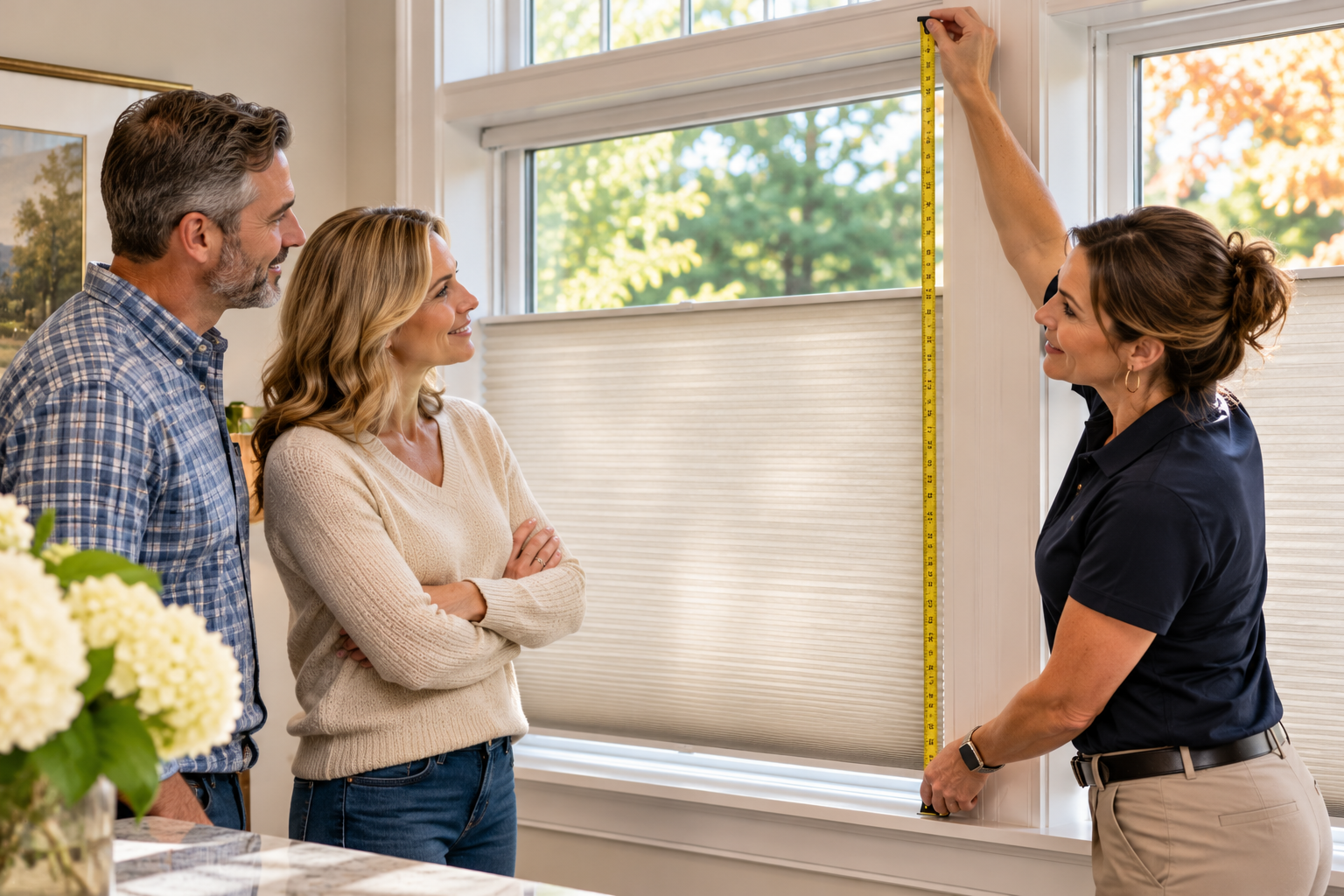
Three people measuring a window with a yellow tape measure in a bright room

Do Top-Down/Bottom-Up Shades Need Professional Measuring?


Professional measuring is especially useful because top-down/bottom-up shades depend on proper fit and smooth operation.


The installer should consider more than width and height.


Important details include:


  • Window depth
  • Trim
  • Mounting surface
  • Handles and locks
  • Sill depth
  • Inside vs. outside mounting
  • Alignment across multiple windows


An inside-mounted top-down/bottom-up shade can create a clean appearance, but the opening needs sufficient space for the hardware.


Professional measuring also helps reduce distracting gaps and alignment differences when several shades appear together.


NOVA provides both custom measuring and professional window treatment installation so the product selection and installation plan can be considered together.


When Should You Choose Another Window Treatment Instead?


Top-down/bottom-up shades are useful, but they are not the best answer for every window.


Consider another treatment when different priorities matter more.


Choose Roller Shades When:


You want a very streamlined, minimal treatment and do not need partial-height privacy.


Choose Plantation Shutters When:


You want adjustable louvers and a more permanent architectural appearance.


Choose Wood or Faux Wood Blinds When:


Directional light control through adjustable slats is more useful than top-down operation.


Choose Roman Shades When:


You want privacy combined with more visible fabric, softness, and decorative character.


Choose Woven Shades When:


Natural texture is a major part of the interior design.


NOVA's approach is not to force one product into every room. The goal is to identify which window treatment solves the specific problem most effectively.


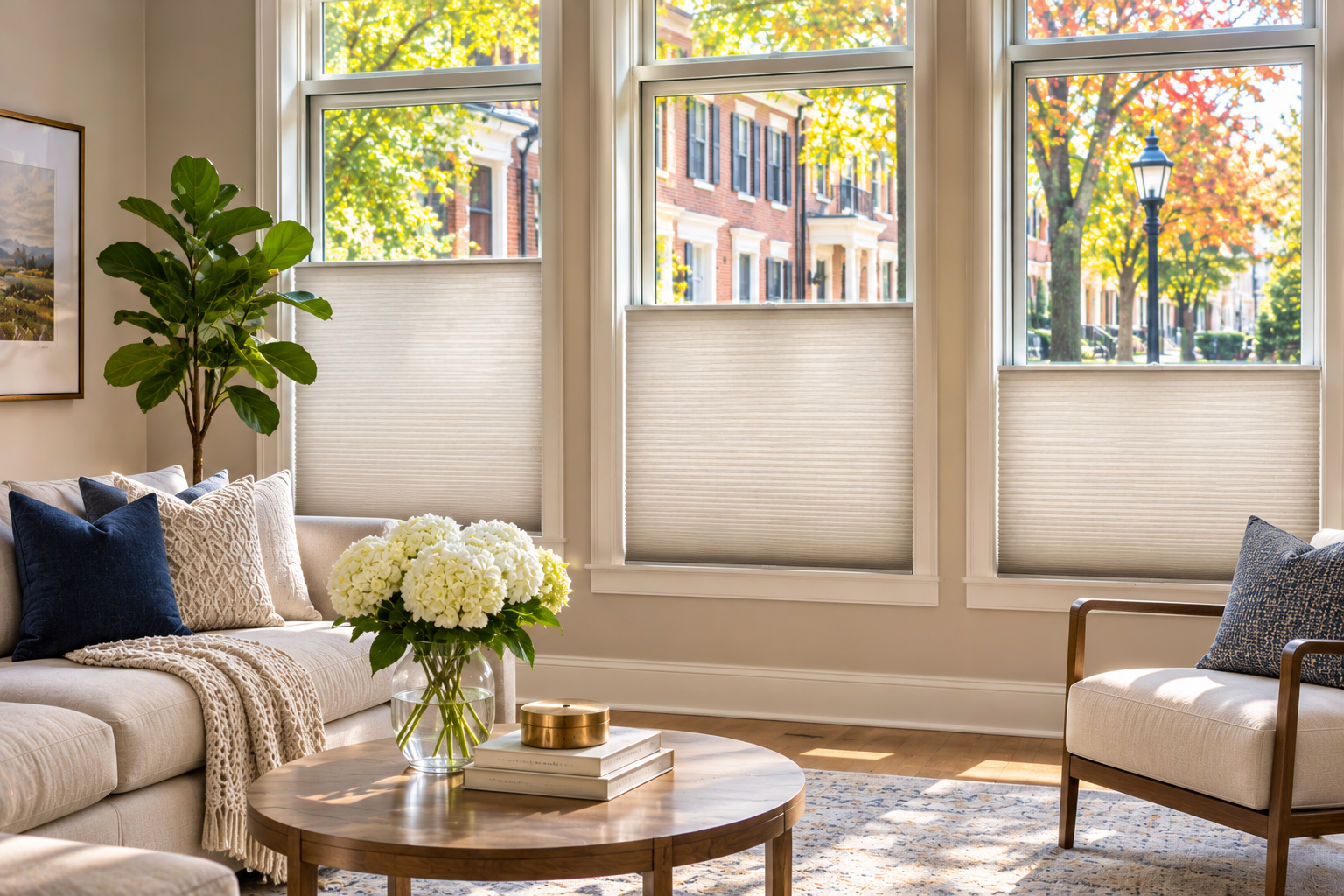
Bright living room with large windows, cellular shades, beige sofa, round coffee table, flowers, and autumn street view

Are Top-Down/Bottom-Up Shades Worth It for Northern Virginia Townhomes?


They can be particularly useful in townhomes because privacy and natural light often compete with each other.


Arlington and Alexandria are obvious examples.


Closely spaced homes, sidewalks, shared outdoor areas, and street-facing windows can make homeowners want more coverage during the day.


Closing a standard shade completely solves the privacy problem but can also remove much of the daylight.

A top-down/bottom-up treatment offers a middle ground.


The same benefit can apply to townhomes and denser neighborhoods throughout Fairfax, Vienna, Tysons, Ashburn, and other Northern Virginia communities.


For homeowners actively comparing privacy shades, that flexibility is worth seeing in person before deciding.


Schedule Your Free In-Home Consultation


Top-down/bottom-up shades solve a very specific problem well: they create privacy where you need it without forcing you to give up all of the natural light coming through the window.


If you're comparing privacy shades for a bedroom, bathroom, townhome, home office, or street-facing room, Rachel and the NOVA team can help you see how different fabrics and operating systems perform in your own home.


We'll bring manufacturer-level expertise directly to your home — no sales pitch, no pressure.


Schedule Your Free In-Home Consultation


Frequently Asked Questions About Top-Down/Bottom-Up Shades


  • Q: What are top-down/bottom-up shades?

    A: Top-down/bottom-up shades can be adjusted from both directions. You can lower the upper portion for daylight while keeping the bottom covered for privacy, or operate the shade more like a conventional bottom-up treatment.

  • Q: Are top-down/bottom-up shades good for privacy?

    A: Yes. Privacy is one of their biggest advantages. They allow homeowners to cover eye-level portions of the window while leaving the upper glass open for natural light.

  • Q: Are top-down/bottom-up shades good for bathrooms?

    A: They can be an excellent choice when privacy and daylight are both important. The selected product and material should also be appropriate for the bathroom's moisture and humidity conditions.

  • Q: Can top-down/bottom-up shades be room darkening?

    A: Compatible shades can be made with fabrics that provide stronger light reduction. Keep in mind that fabric opacity, mounting style, and perimeter gaps all affect how dark the finished room becomes.

  • Q: Are top-down/bottom-up shades available without cords?

    A: Cordless configurations are available with compatible products. NOVA can help homeowners compare operating systems based on the window, room, and desired functionality.

  • Q: Does NOVA Blinds, Shades & Shutters offer top-down/bottom-up shades?

    A: NOVA offers custom shade solutions for Northern Virginia homeowners and can help determine whether a top-down/bottom-up configuration is the best choice for a particular window, privacy need, and room.

Recent Posts

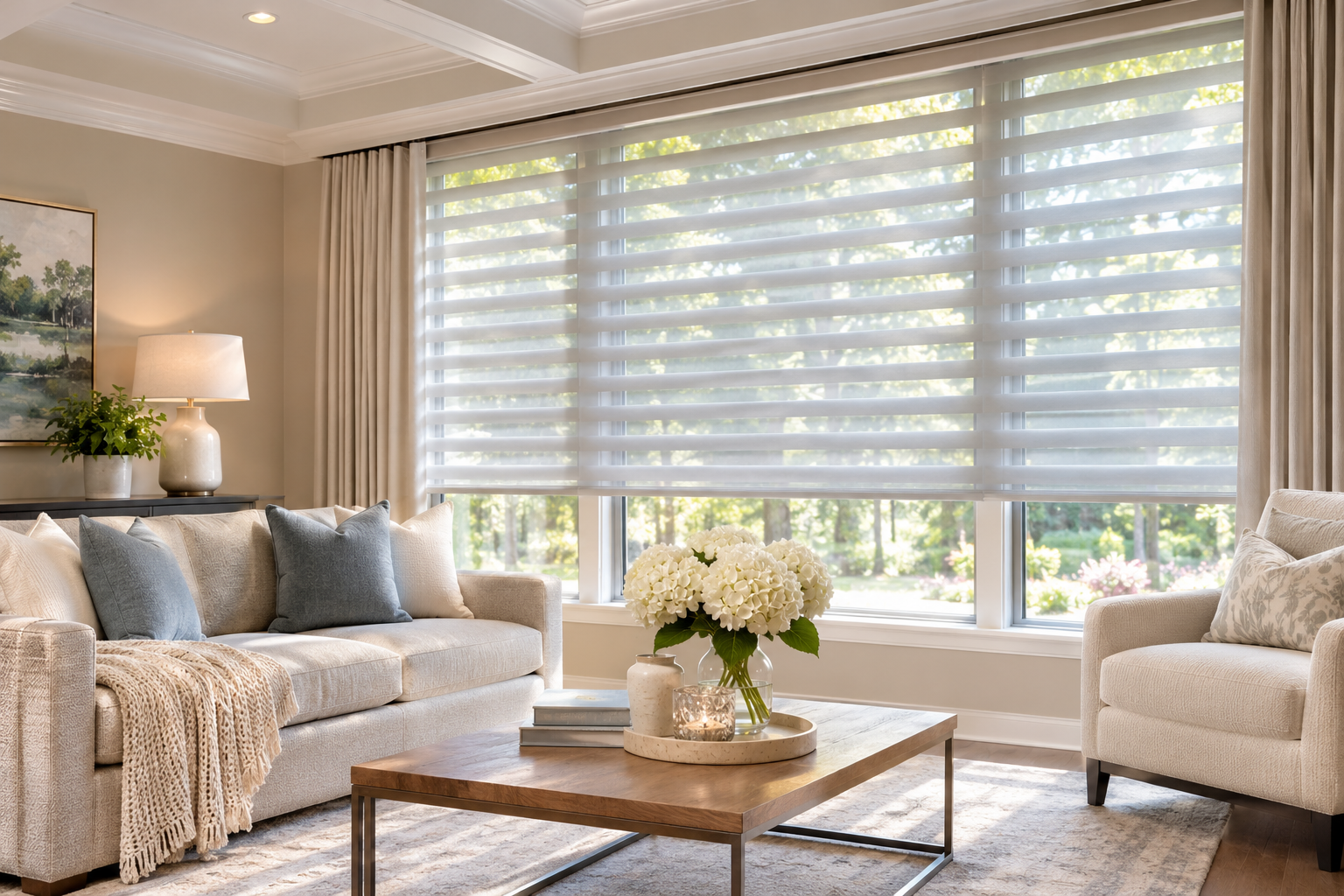
Bright living room with a gray sofa and armchair, a wooden coffee table, and wide windows with striped blinds.
By Nova Blinds Shades Shutters • November 23, 2026
Explore sheer shades in Northern Virginia for privacy, natural light, large windows, motorization, and Norman® PerfectSheer™ window shade options for your home.
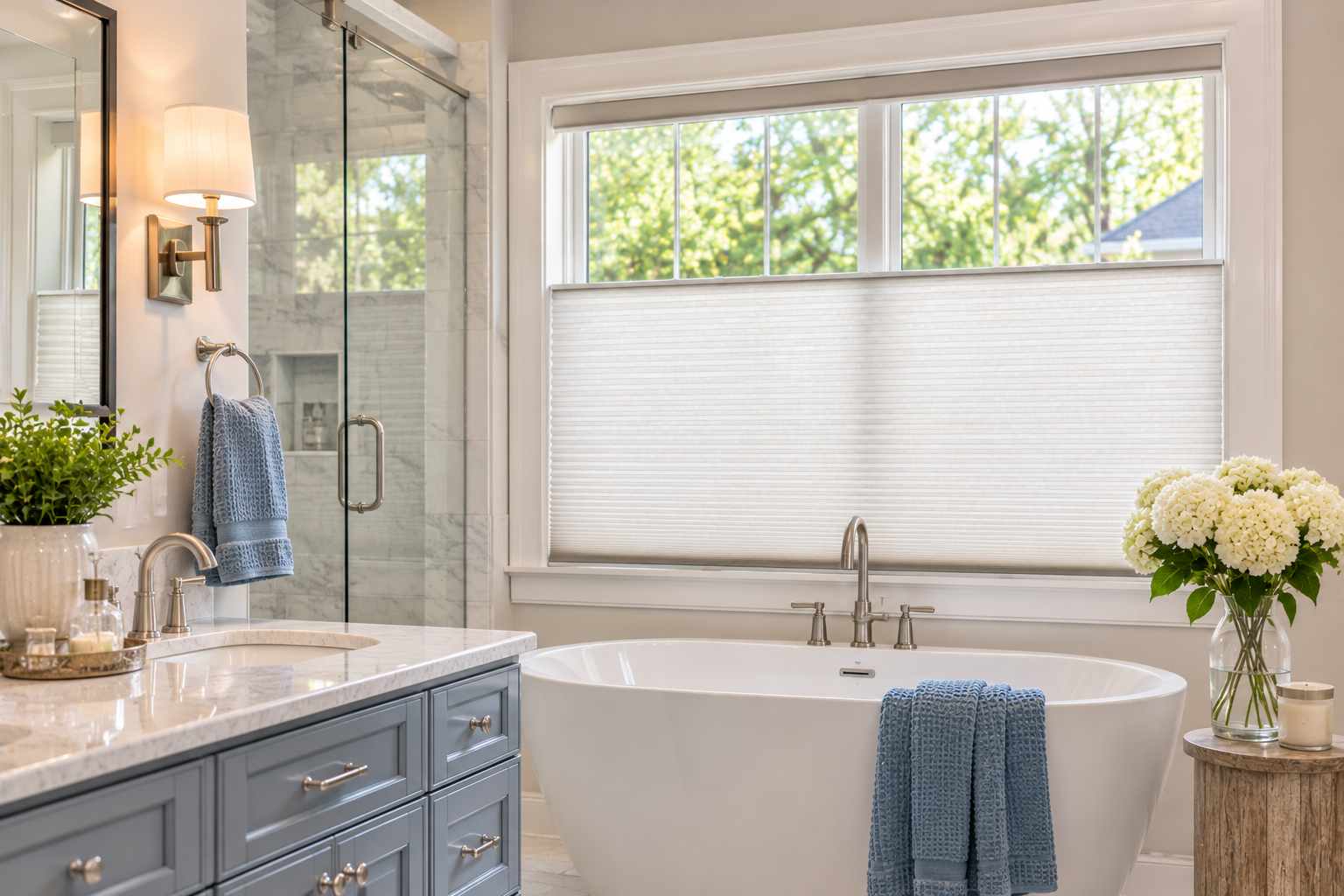
Bright bathroom with freestanding tub, double vanity, and large window with shades
By Nova Blinds Shades Shutters • November 16, 2026
Compare bathroom window treatments in Northern Virginia for privacy, humidity, natural light, and durability, including custom blinds, shades, and shutters.
Elegant bedroom with gray bedding, three windows with shades, and a cozy armchair by the bed.
By Nova Blinds Shades Shutters • October 29, 2026
Explore blackout shades in Northern Virginia, including edge gaps, mounting styles, room-darkening fabrics, side channels, and options for bedrooms and media rooms.
Installer adjusting a woven window shade beside a bright living room window.
By Nova Blinds Shades Shutters • October 23, 2026
Need blind installation in Northern Virginia? Learn why professional measuring, mounting, window depth, trim, and specialty installation affect the final fit.
Cozy living room with a stone fireplace, large windows, neutral furniture, and a mountain view at sunset
By Nova Blinds Shades Shutters • October 19, 2026
Discover energy-efficient window treatments for Northern Virginia homes, including cellular shades, interior shutters, layering, window fit, and motorized options.
Bright living room with beige sofas, striped pillows, coffee table, and large windows with shades
By Nova Blinds Shades Shutters • October 13, 2026
Explore Roman shades in Northern Virginia, including fold styles, privacy liners, room darkening, light control, and where they work best in your home.
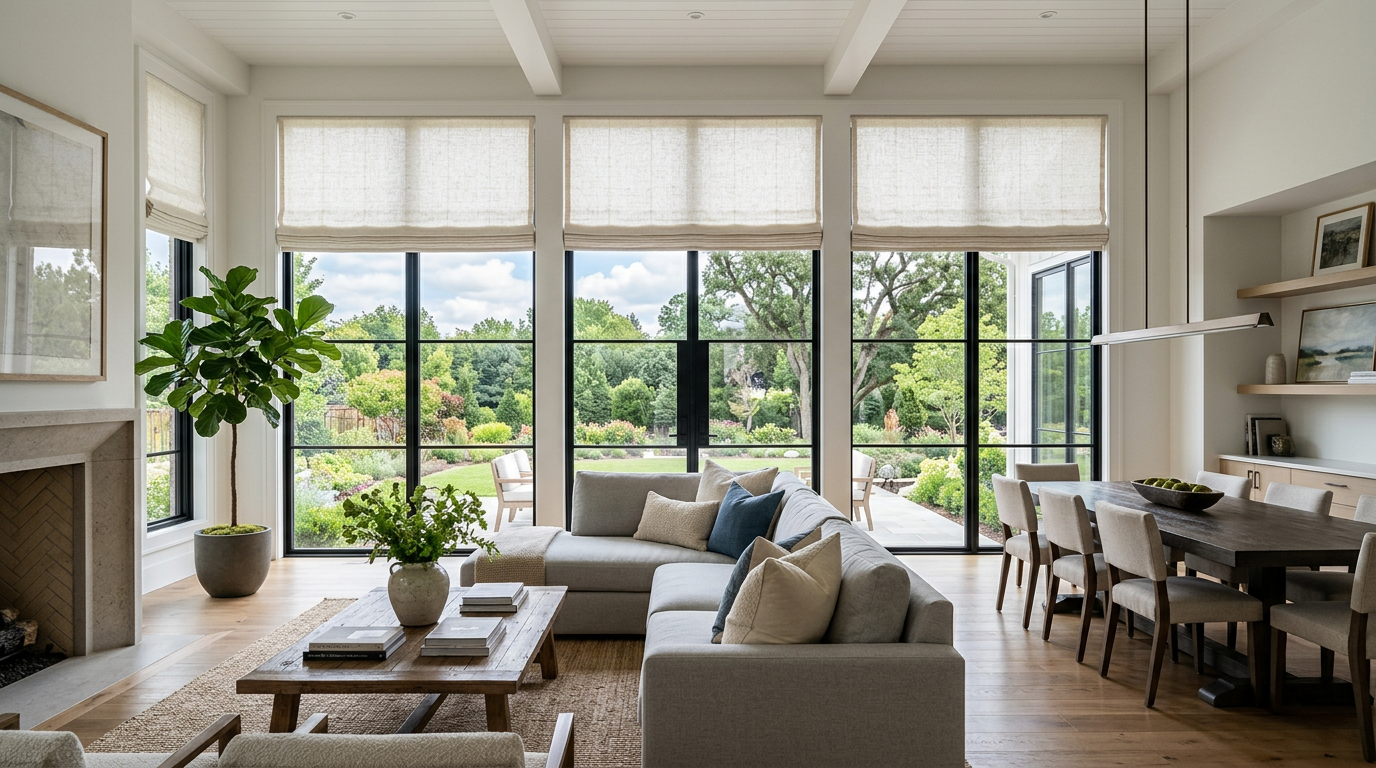
Bright living room with large windows, beige sofas, plants, fireplace, and dining table overlooking a garden
By NoVa Blinds Shades Shutters • September 29, 2026
Explore window treatments in McLean, Virginia, for privacy, large windows, views, motorization, and style. See which blinds, shades, and interior shutters fit best.
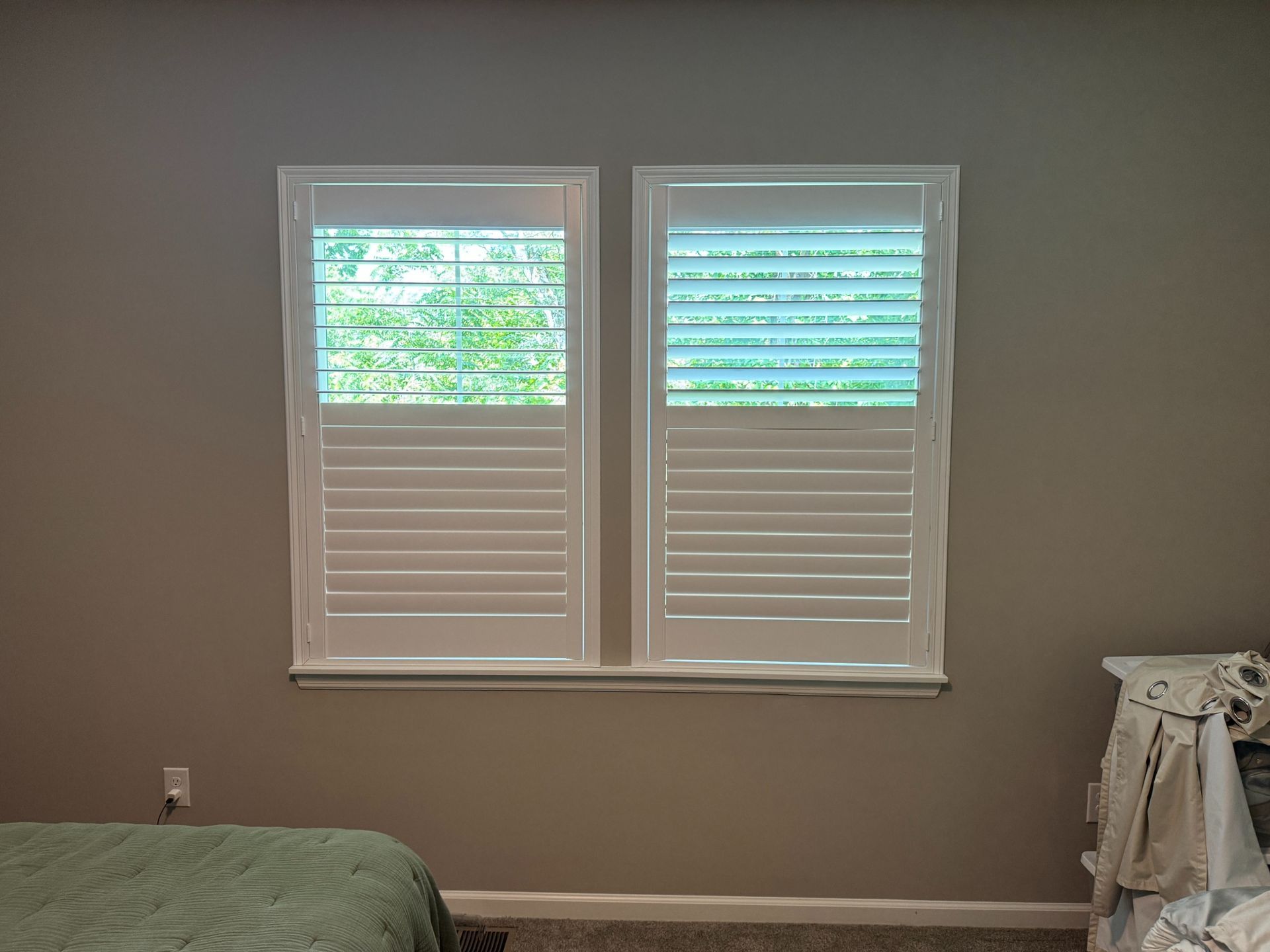
Empty bedroom wall with two white shuttered windows and a bed corner in the foreground
By NoVa Blinds Shades Shutters • September 23, 2026
Considering plantation shutters in Northern Virginia? Learn about louver size, wood vs. composite, privacy, fit, measuring, and custom options for your home.
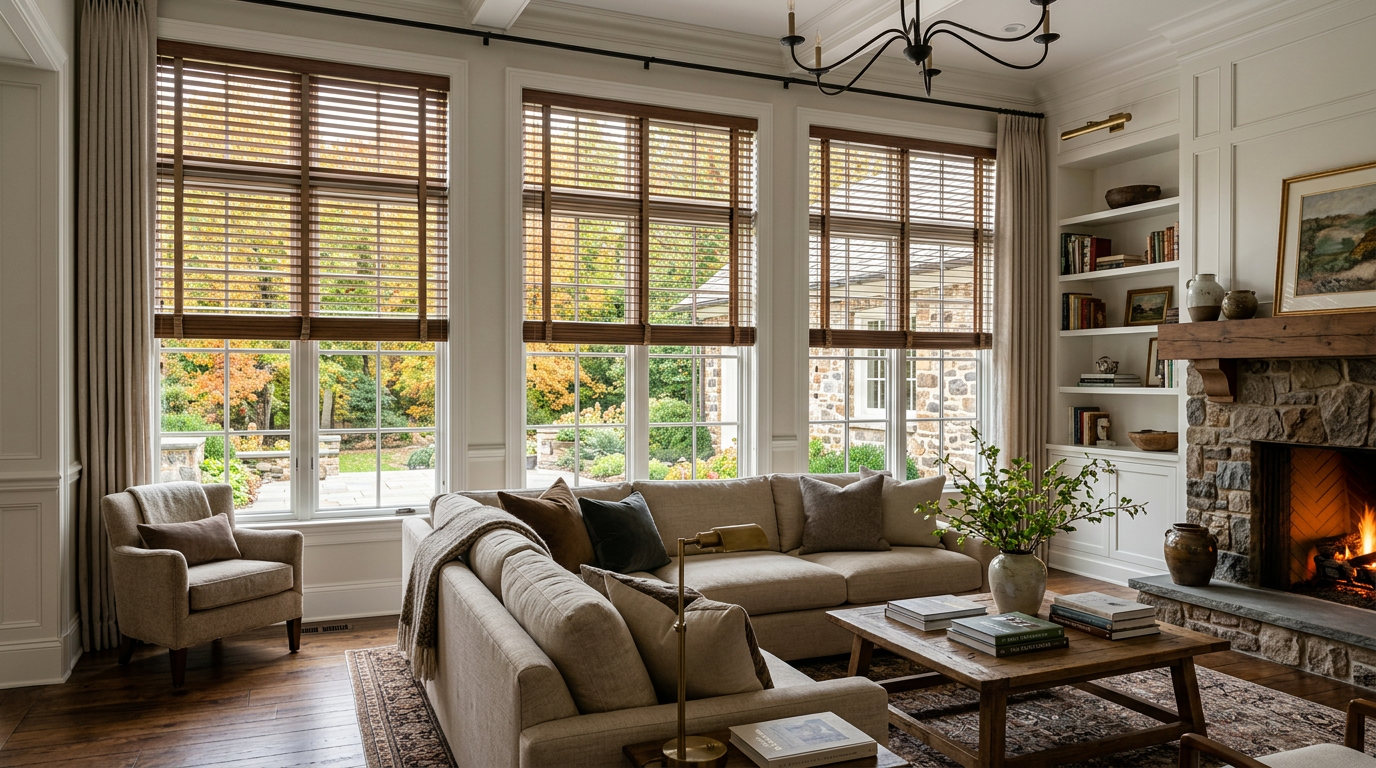
Cozy living room with large windows, beige sofas, a fireplace, and warm natural light.
By NoVa Blinds Shades Shutters • September 15, 2026
Compare custom blinds in Vienna, VA, including wood, faux wood, roller and Roman shades, shutters, privacy, motorization, and design options for your home.
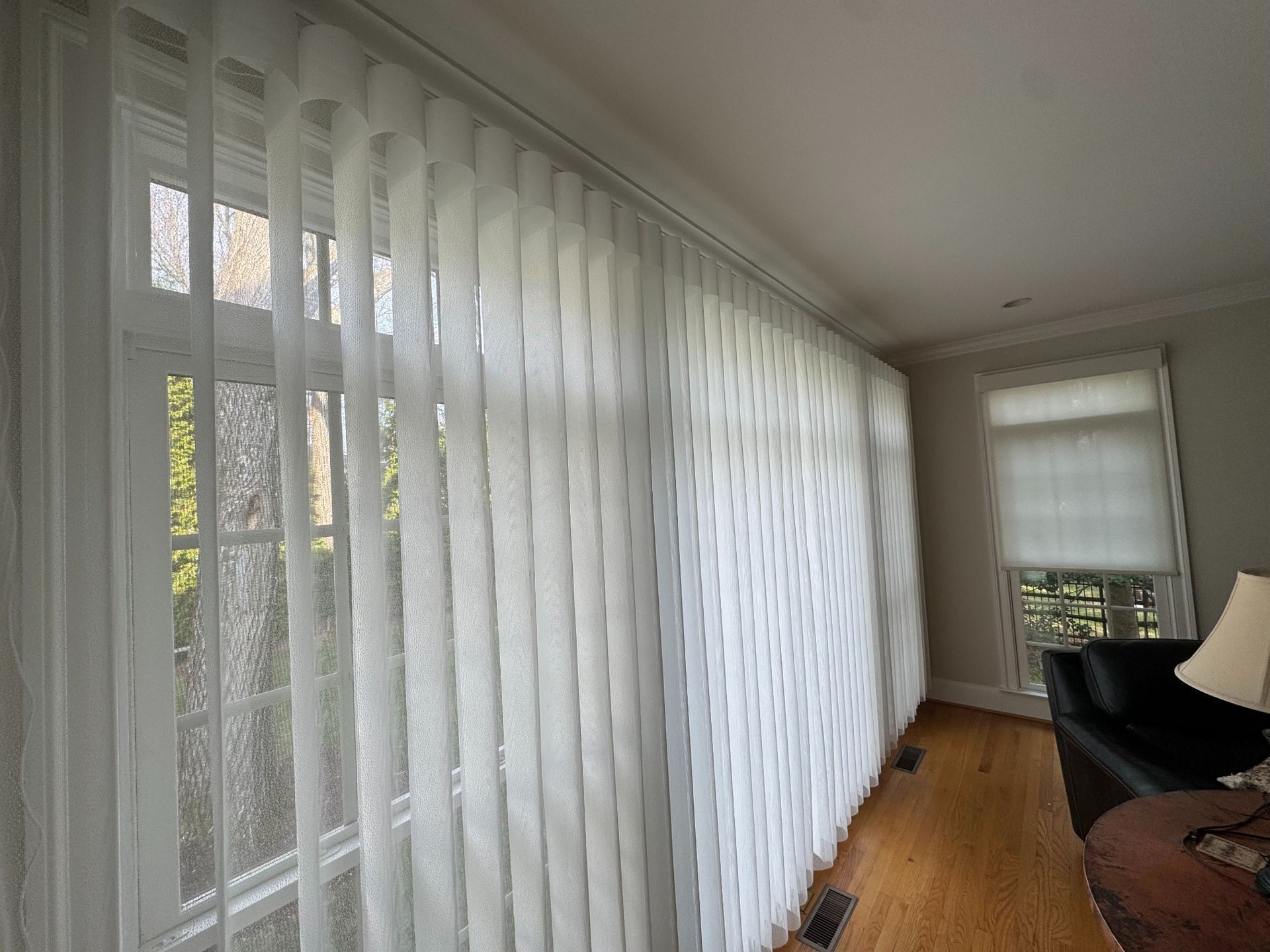
Living room with floor-to-ceiling sheer curtains, a window seat, wood floor, and a black chair by the window
By NoVa Blinds Shades Shutters • September 15, 2026
Explore window treatments for sliding glass doors in Northern Virginia, including SmartDrape®, vertical shades, privacy, light control, and easy door access.
Show More