Bathroom Window Treatments in Northern Virginia
What Are the Best Window Treatments for Northern Virginia Bathrooms?
The best bathroom window treatments provide privacy while standing up to the moisture and humidity that come with daily use. For Northern Virginia homeowners, that often means choosing materials differently than they would for a bedroom, dining room, or home office.
Rachel Brittain, co-founder of NOVA Blinds, Shades & Shutters, looks at where the window sits in the bathroom, how much humidity the room experiences, how much privacy is needed, and whether the homeowner still wants natural light.
A powder room window has very different requirements from a window directly beside a shower or soaking tub.
That distinction should influence the product from the beginning.

What Are the Best Bathroom Window Treatments?
Faux wood blinds, moisture-appropriate shutters, cellular shades, top-down/bottom-up shades, and selected roller shades can all work well in bathrooms.
The best choice depends on three main questions:
- How close is the window to water?
- How much privacy does the room require?
- How much natural light do you want to keep?
A bathroom window that sits several feet from the shower may offer more treatment choices than one located directly above a tub.
The amount of daily ventilation matters too.
A well-ventilated powder room may not experience much more moisture than another room in the house. A primary bathroom used by several people each morning can be a much more demanding environment.
Rachel considers those differences before recommending the material.

Are Faux Wood Blinds Good for Bathrooms?
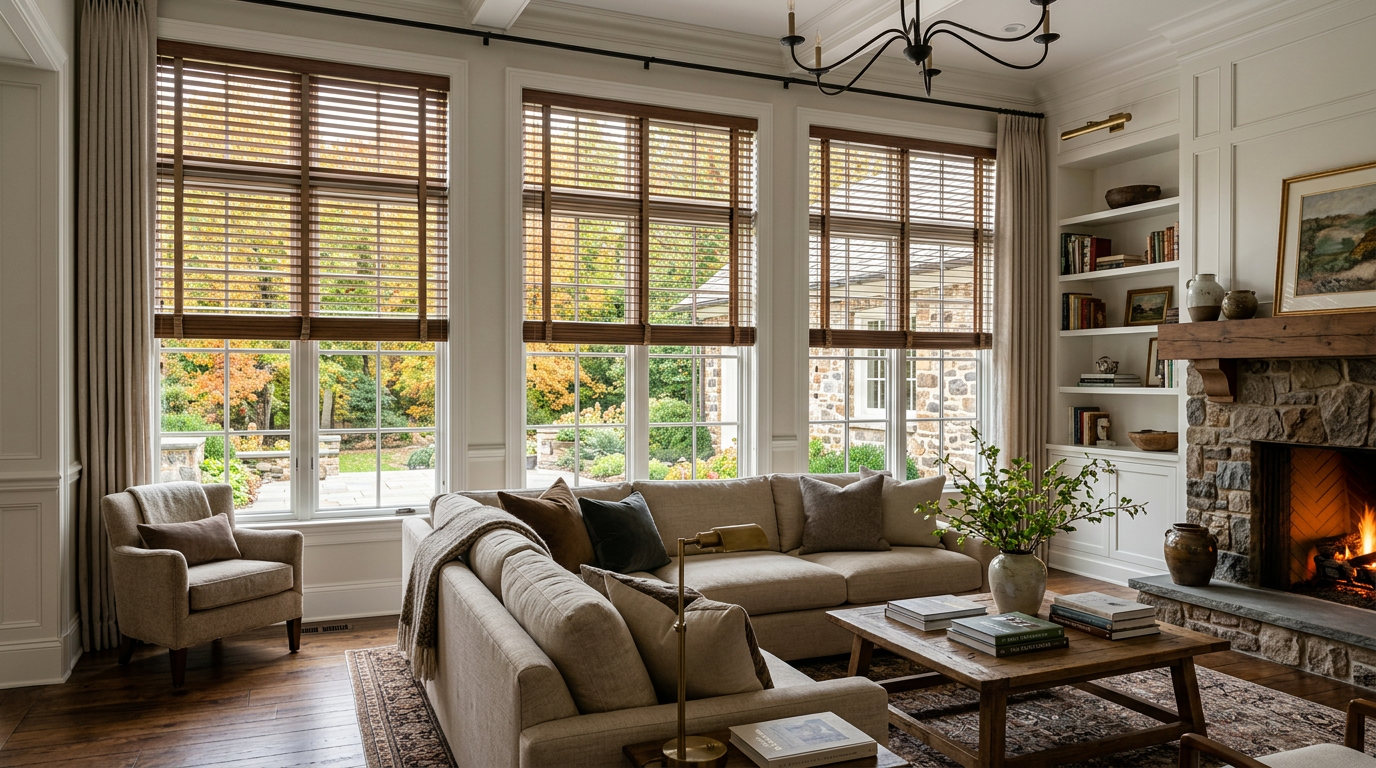
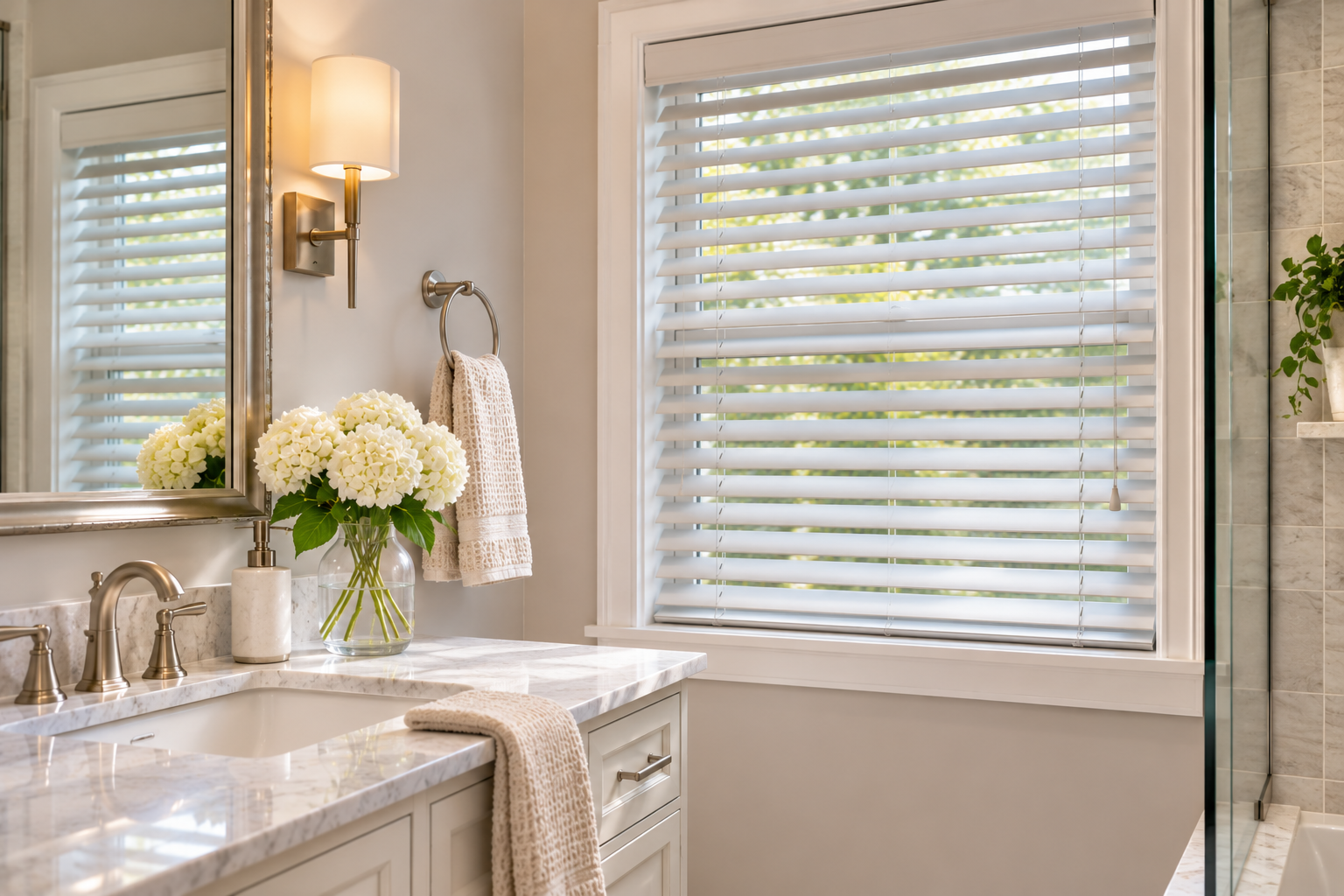
Faux wood blinds are often a strong bathroom option because they offer the appearance and adjustability of horizontal blinds without relying on natural wood.
Their adjustable slats make privacy easy to control.
Homeowners can tilt the slats to limit direct views while still allowing daylight into the room.
Faux wood blinds can work particularly well for:
- Bathrooms
- Powder rooms
- Windows near sinks
- High-use family bathrooms
- Street-facing bathroom windows
They are also easy to coordinate with white trim, painted cabinetry, tile, and other common bathroom finishes.
NOVA offers Norman® Ultimate™ Faux Wood Blinds as one option for homeowners who want the traditional look of a blind with a material better suited to rooms where moisture may be present.
The exact installation conditions still matter.
Even a moisture-tolerant window treatment should not be treated as though constant direct water exposure is irrelevant.
Should You Use Real Wood Blinds in a Bathroom?
Real wood blinds may work in some bathrooms, but they require more careful consideration than faux wood.
Natural wood responds to environmental conditions.
Repeated exposure to significant humidity and moisture may make another material a more practical choice, particularly near showers, tubs, or sinks.
A lightly used powder room can be a different situation.
If the window is far from water and the space has good ventilation, Rachel may have more flexibility when comparing real wood with faux wood.
The decision should be based on the actual room rather than choosing wood simply because it matches cabinetry or flooring.
For homeowners who love the appearance of wood, a faux wood product may sometimes provide the visual effect they want with fewer concerns about bathroom conditions.

Are Shutters a Good Choice for Bathroom Windows?
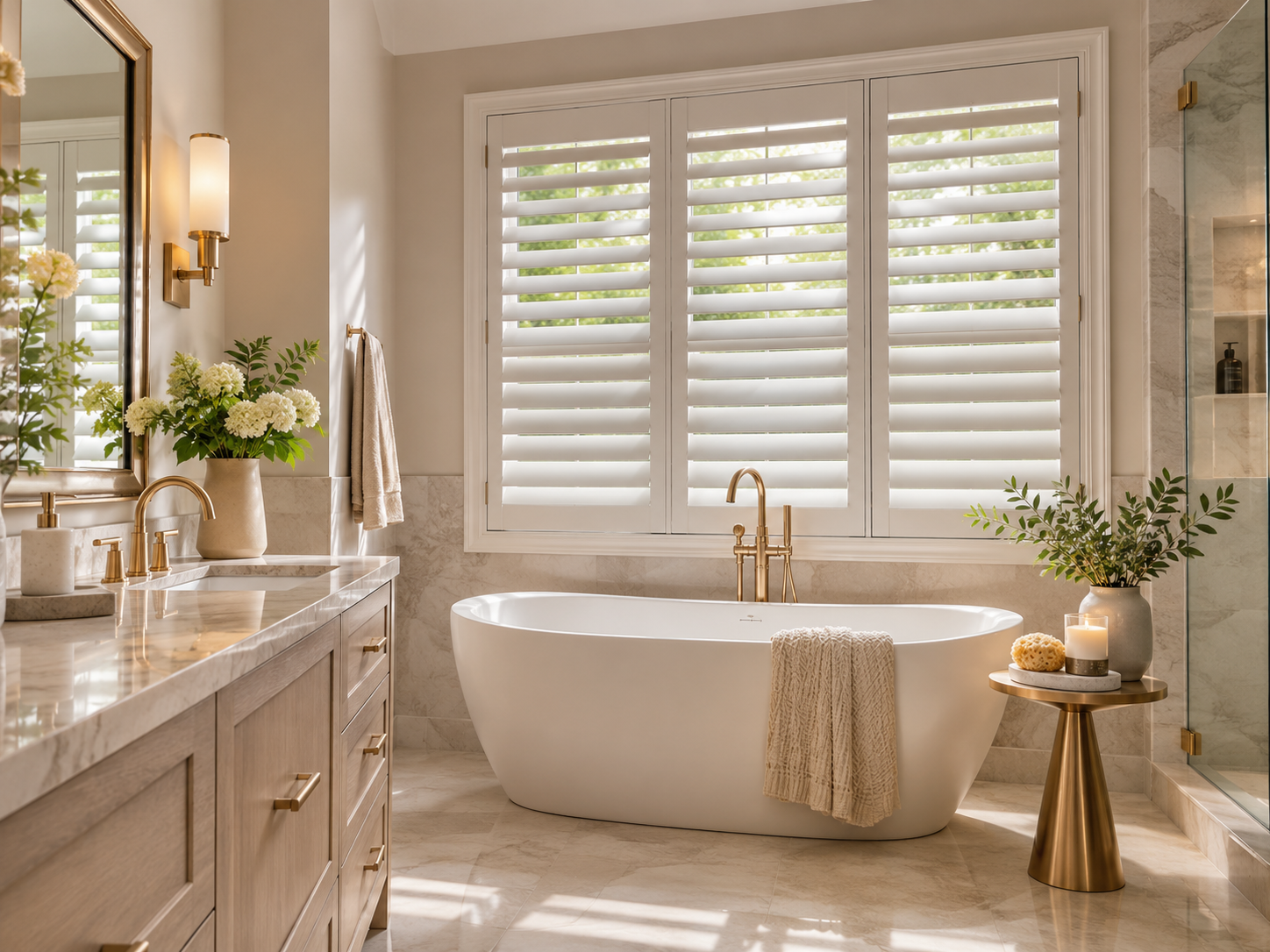
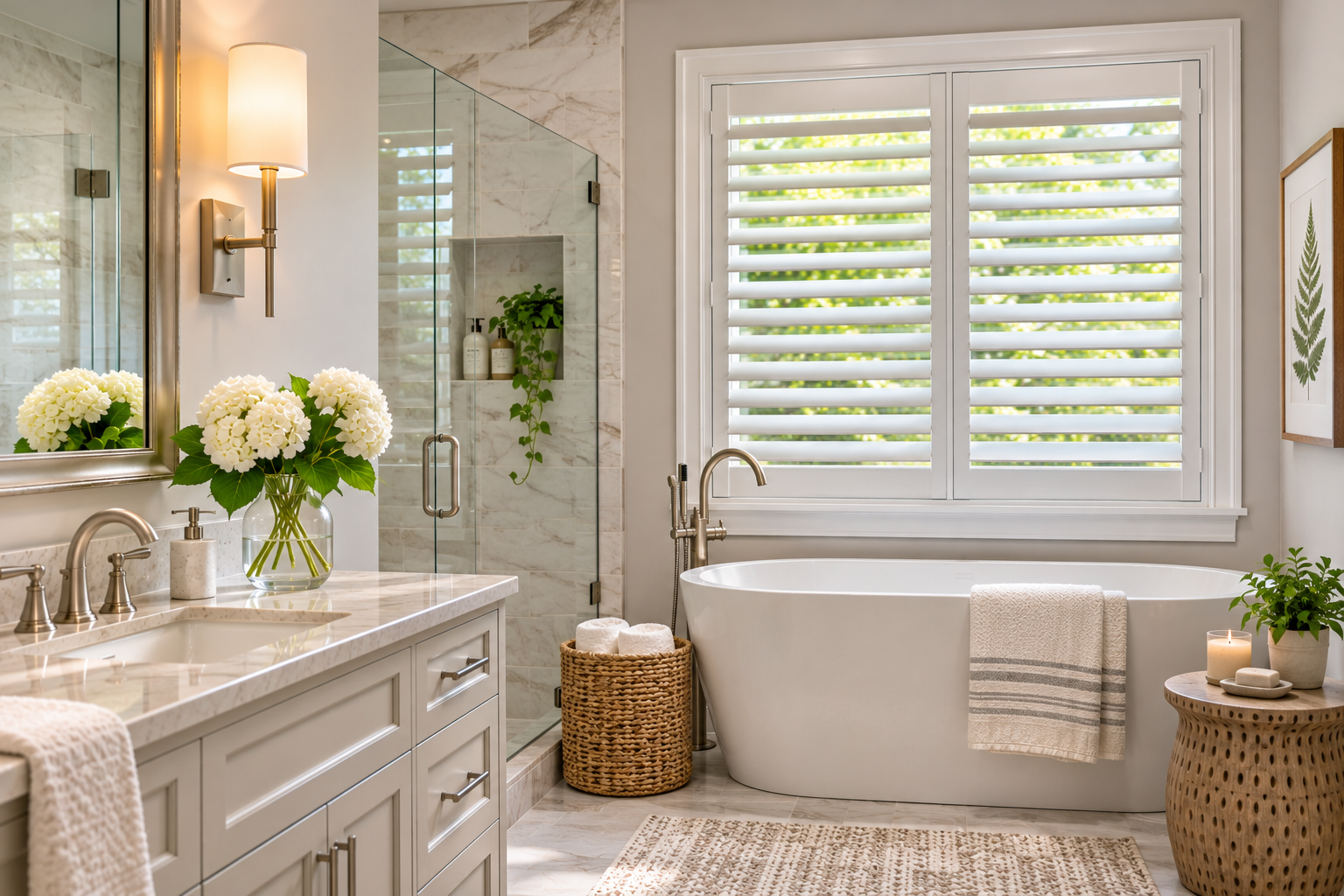
Interior shutters can work very well in bathrooms when the material is appropriate for the environment.
They offer several advantages:
- Adjustable privacy
- Directional light control
- A clean architectural appearance
- No large amount of loose fabric
- Easy integration with substantial window trim
Composite shutters are often worth considering in bathrooms because engineered materials may be better suited to changing humidity than natural wood.
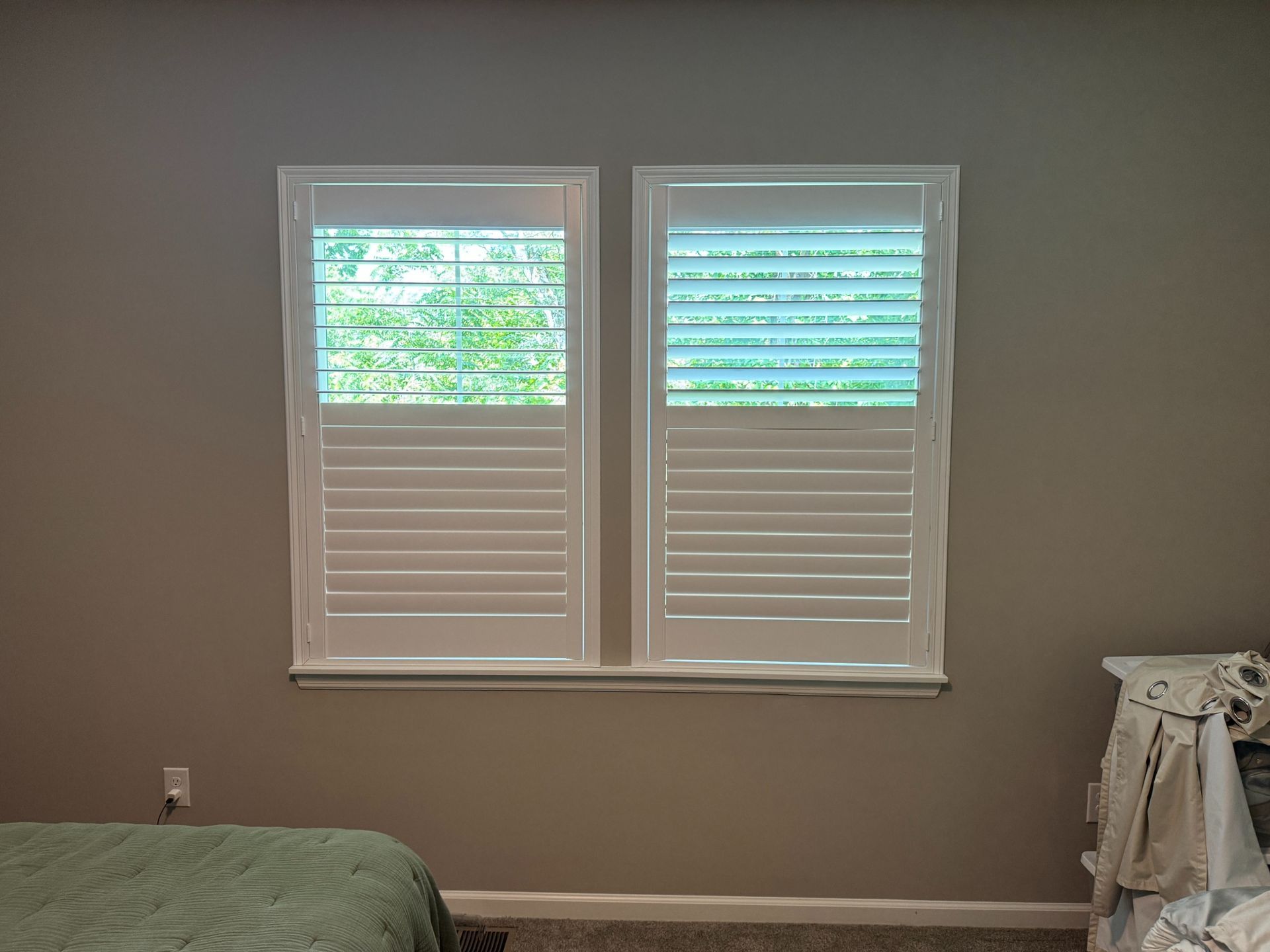
Plantation shutters are one specific interior shutter style and use wider louvers than more traditional interior shutters.
Those wider louvers can provide an open, clean appearance while giving homeowners precise control over privacy and daylight.
That can be especially useful on windows near a bathtub where the homeowner wants privacy without making the bathroom feel dark.
Are Top-Down/Bottom-Up Shades Good for Bathrooms?
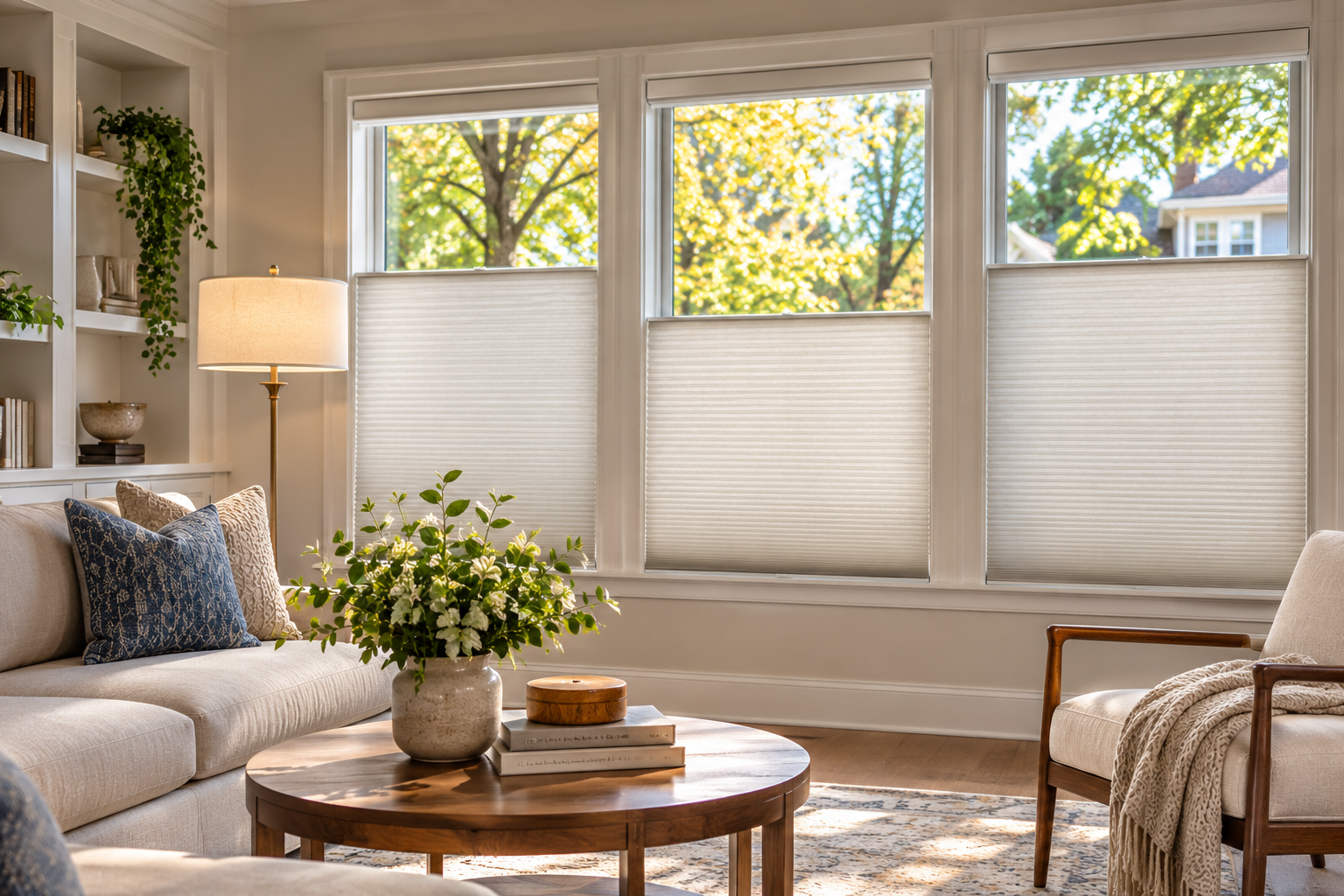
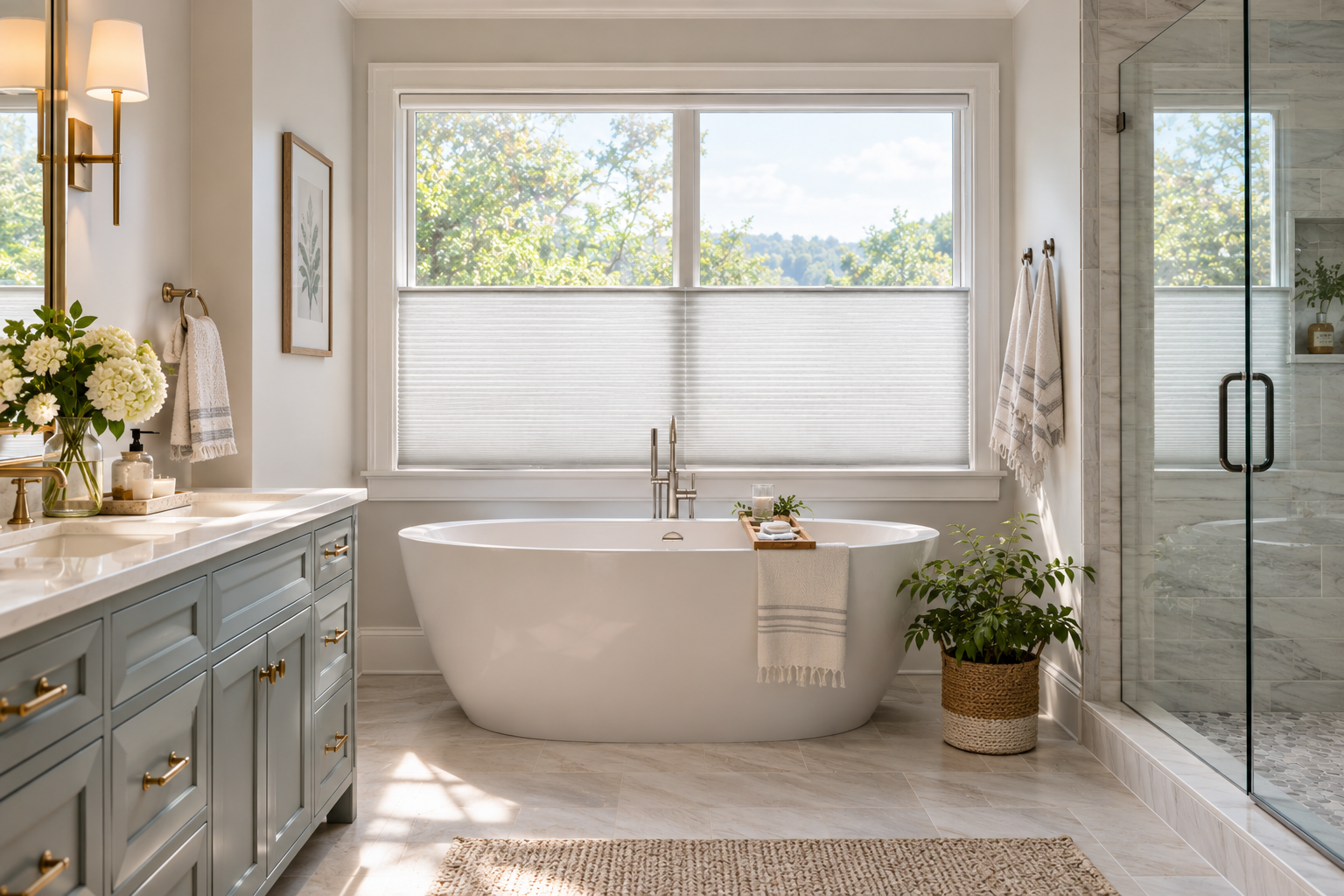
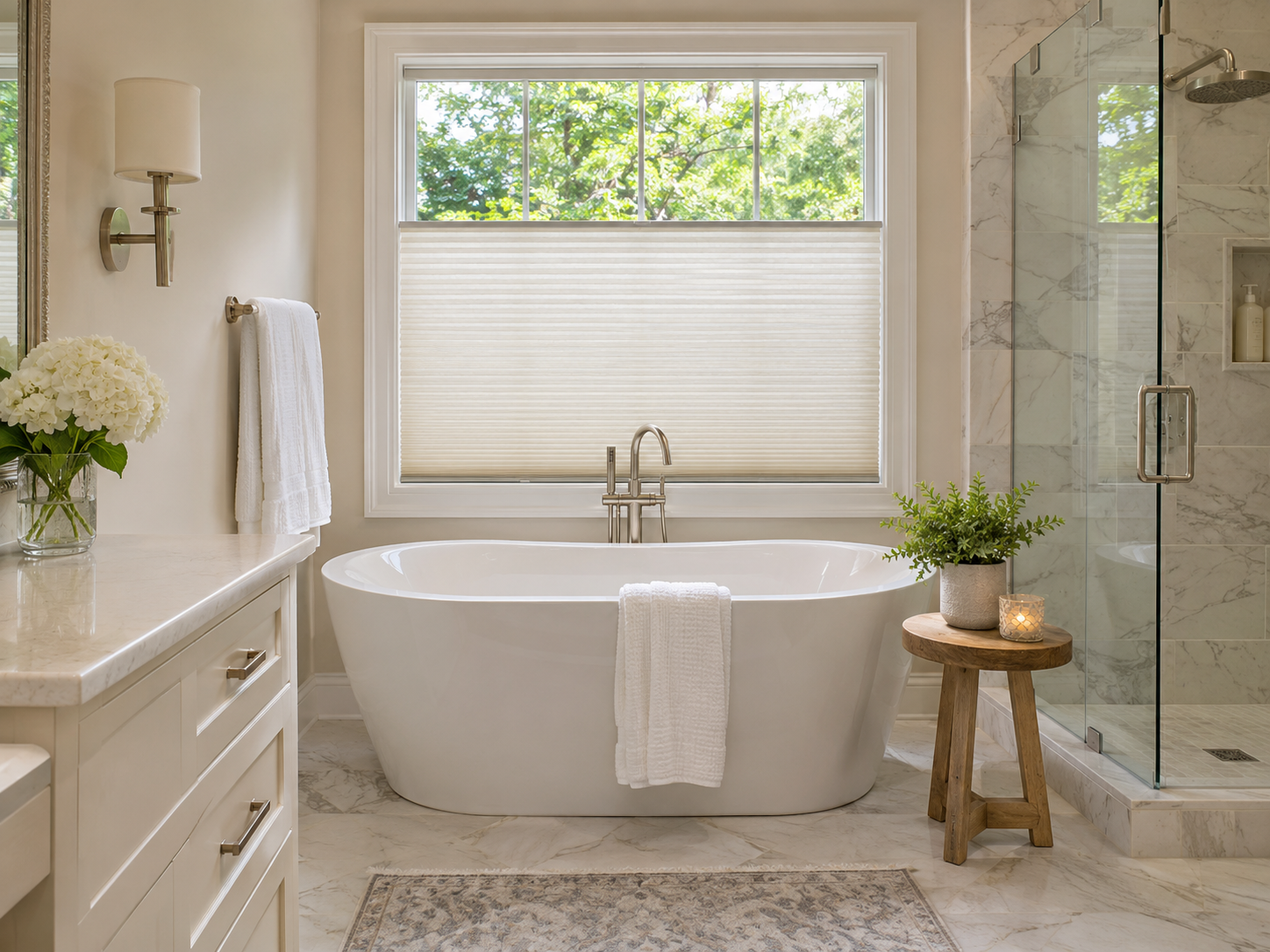
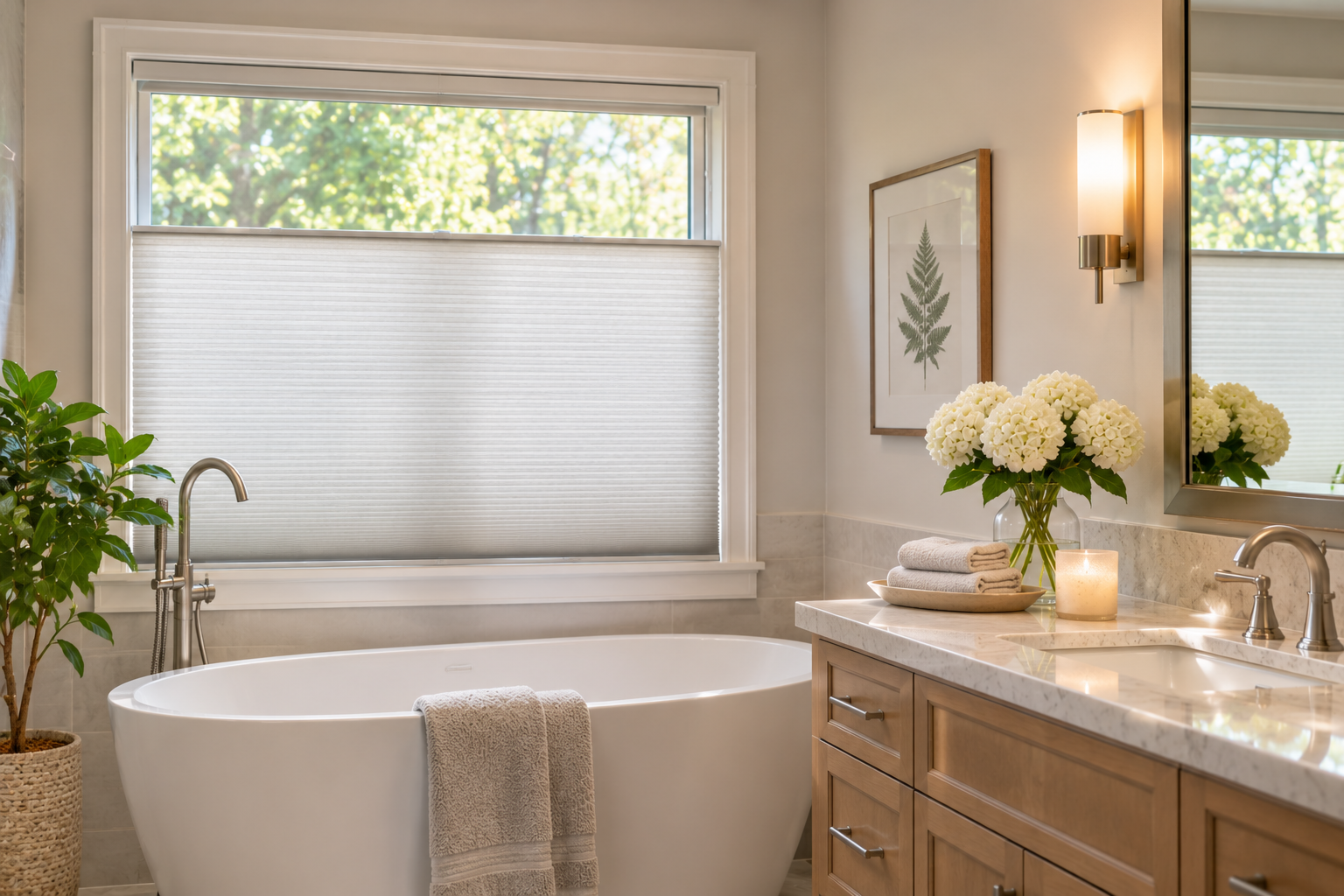
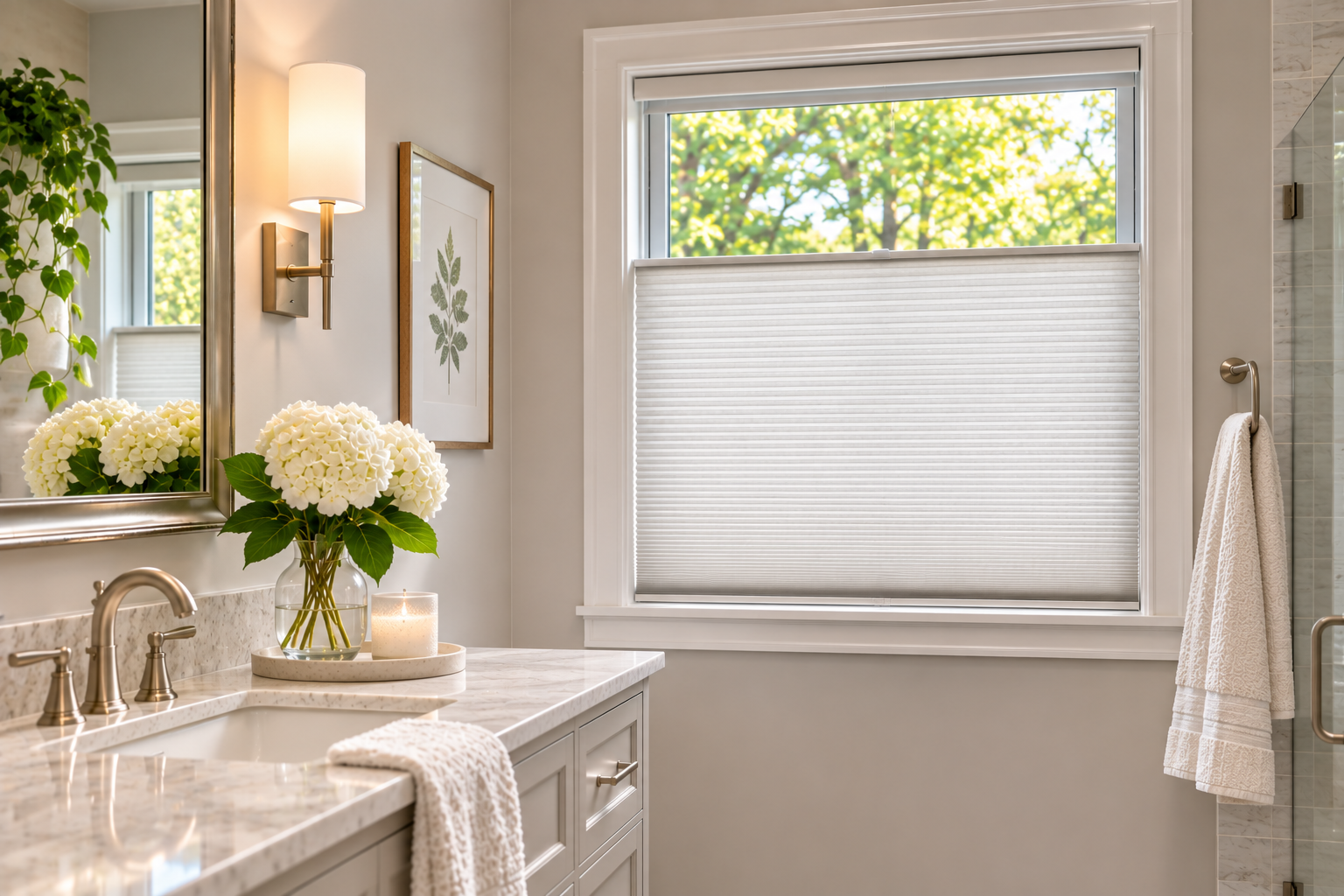
Yes. Top-down/bottom-up shades can be one of the most practical options for bathroom privacy because the lower portion of the window can remain covered while the upper portion stays open.
That solves a common bathroom problem:
How do you get privacy without giving up natural light?
A homeowner can keep the lower section covered while allowing daylight through the top of the window.
This works especially well for:
- First-floor bathrooms
- Townhomes
- Homes with nearby neighbors
- Windows facing sidewalks or streets
- Bathrooms with attractive outdoor light but limited privacy
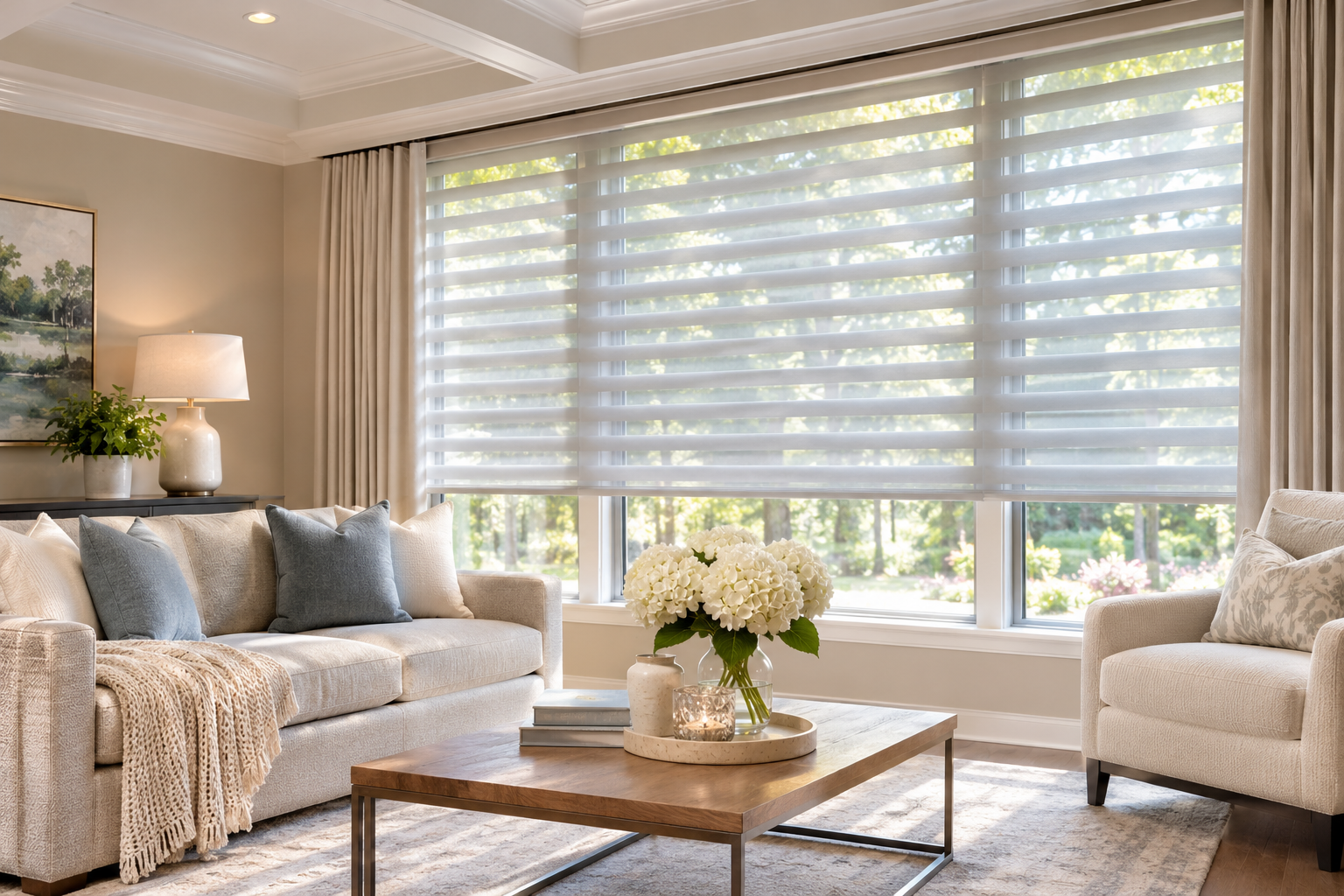
Cellular top-down/bottom-up shades can provide a clean appearance while offering multiple fabric opacity choices.
The fabric and environmental conditions should still be evaluated carefully, particularly in a room with heavy humidity.

What Window Treatments Work Best Above a Bathtub?
Windows above a bathtub need privacy, but they also need a treatment that makes sense for the room's moisture level and the window's accessibility.
Homeowners should think about:
- Direct splash exposure
- Humidity
- Window height
- Ease of operation
- Cleaning
- Privacy
- Natural light
- Mounting depth
Shutters can be a good option when the material is appropriate.
Faux wood blinds may also work in some configurations.
A top-down/bottom-up shade can be useful when privacy is needed primarily through the lower portion of the glass.
The correct treatment depends heavily on how close the window actually is to water.
A window several feet behind a freestanding tub is not the same as a window inside or immediately beside a shower enclosure.
Are Roller Shades Good for Bathroom Windows?
Roller shades can work as bathroom window coverings when the selected material is appropriate for the room and the shade is positioned away from excessive direct moisture.
Their streamlined appearance makes them especially attractive in updated and contemporary bathrooms.
Roller shades can provide:
- Privacy
- Light filtering
- Room darkening
- A clean profile
- Simple operation
Fabric choice matters.
A bathroom roller shade should be selected for more than color and pattern.
Rachel considers how the fabric will respond to the room's humidity and where the treatment will sit relative to showers, tubs, and sinks.
The mounting style also affects privacy.
An inside-mounted roller shade may leave small gaps at the sides. If the window faces a neighbor or sidewalk, those gaps should be evaluated before ordering.

How Much Privacy Do Bathroom
Shades Need?
Bathroom privacy should be evaluated both during the day and after dark.
This is important because a fabric that appears private in daylight may behave differently once interior lights are turned on.
Homeowners should consider the view from outside at night.
This is especially relevant in:
- Arlington townhomes
- Alexandria neighborhoods
- Fairfax subdivisions
- Vienna homes with close neighboring properties
- First-floor bathrooms throughout Northern Virginia
Light-filtering fabrics can create a bright, attractive bathroom, but the level of privacy varies by material.
More opaque treatments may be more appropriate when the window has a direct sightline from outside.
Rachel recommends considering the actual exposure instead of assuming every bathroom requires the same opacity.
What Is the Best Bathroom Window Treatment for Natural Light and Privacy?
Top-down/bottom-up shades and adjustable shutters are two of the strongest options when homeowners want both natural light and privacy.
They solve the problem differently.
A top-down/bottom-up shade can cover the lower glass while exposing the upper portion.
Shutters allow homeowners to tilt the louvers to redirect views and sunlight.
Faux wood blinds can provide similar directional control through adjustable slats.
The right choice often comes down to the desired appearance.
Choose top-down/bottom-up shades when you want:
- Soft filtered light
- Partial-height privacy
- A clean fabric treatment
Choose shutters when you want:
- A more architectural look
- Adjustable louvers
- A substantial treatment
Choose faux wood blinds when you want:
- Traditional horizontal slats
- Easy light adjustment
- A familiar blind appearance
There is no single bathroom treatment that is automatically best.

Should Bathroom Window Treatments Be Cordless?
Cordless window treatments can provide a cleaner appearance and eliminate dangling lift cords.
That can be especially useful in smaller bathrooms where windows may sit near counters, tubs, or frequently used spaces.
Cordless options may be available for:
- Faux wood blinds
- Cellular shades
- Roller shades
- Other compatible treatments
Motorization may also make sense when the window is difficult to reach.
For example, a shade positioned behind a soaking tub may be inconvenient to operate manually every day.
Rachel recommends motorization when it solves an access problem rather than adding automation simply because it is available.
Do Bathroom Window Treatments Need Professional Measuring?
Professional measuring can be particularly helpful in bathrooms because windows are often surrounded by tile, deep trim, unusual sills, cabinetry, tubs, or other obstacles.
An installer may need to evaluate:
- Window depth
- Tile placement
- Trim
- Handles
- Mounting surfaces
- Tub clearance
- Inside vs. outside mounting
- Access for operation
Bathrooms can also contain harder mounting surfaces than other rooms.
Professional measuring allows those installation conditions to be considered before the product is ordered.
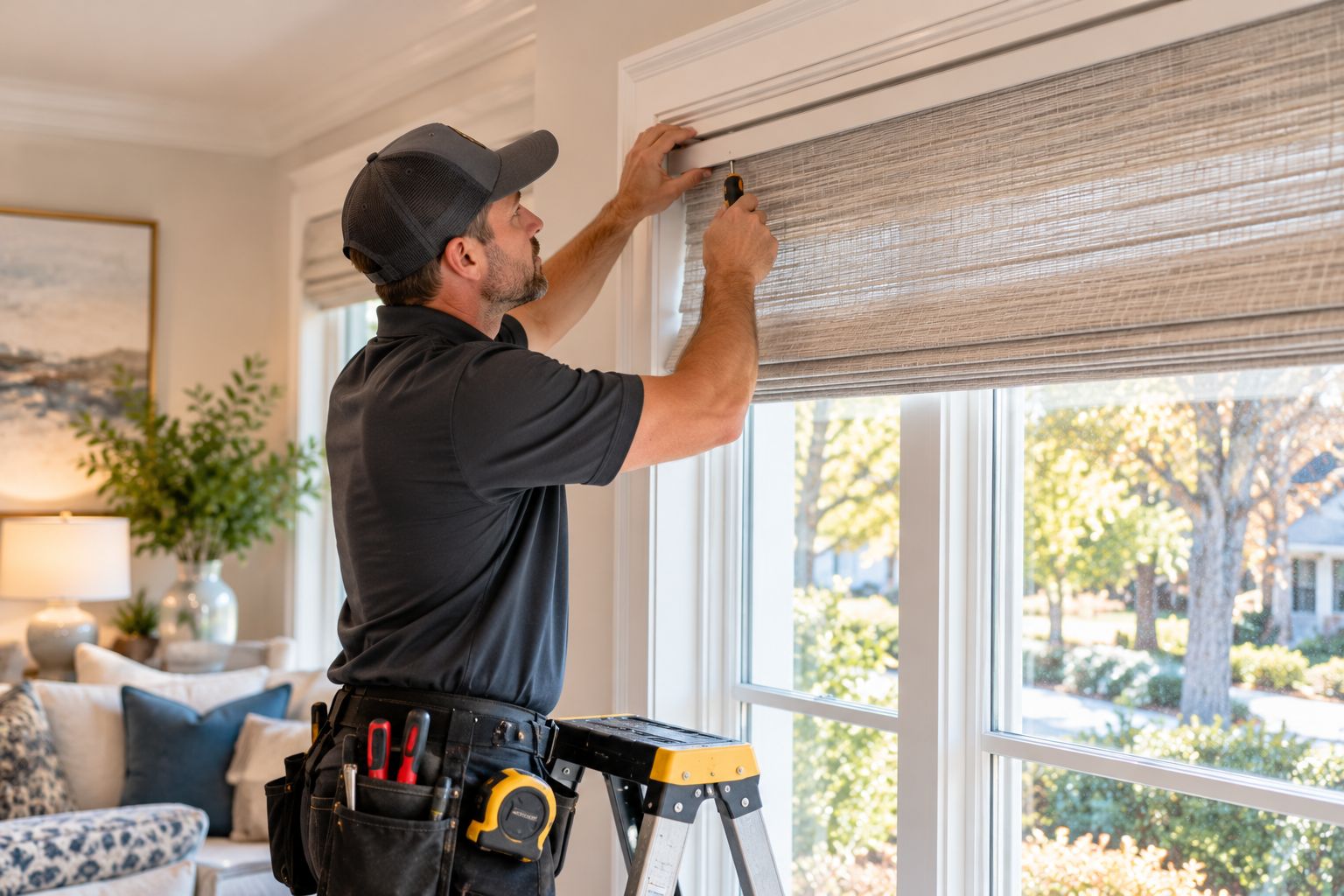
NOVA Blinds, Shades & Shutters provides professional measuring and window treatment installation so the product, mount, and operating system can be planned together.

Which Bathroom Window Treatment Is Best for Your Home?
The best bathroom window treatment depends on where the window is located and which problem you need to solve.
Consider faux wood blinds when:
- Adjustable slats are important
- You want the appearance of wood
- Humidity makes natural wood less desirable
Consider composite shutters when:
- You want an architectural treatment
- Privacy and adjustable light are priorities
- The material is appropriate for bathroom conditions
Consider top-down/bottom-up shades when:
- You want natural light above eye level
- Privacy is the main concern
- The window faces neighbors or a street
Consider roller shades when:
- You prefer a streamlined look
- The window is appropriately positioned
- A suitable fabric is available
The right answer may be different in a powder room, primary bathroom, and children's bathroom within the same home.
Schedule Your Free In-Home Consultation
Bathroom window treatments have to do more than look good. They need to provide privacy, work with the room's humidity and moisture, fit the window correctly, and preserve the amount of natural light you want.
Rachel and the NOVA team can help you compare faux wood blinds, shutters, top-down/bottom-up shades, roller shades, and other options in the bathroom where they will actually be installed.
We'll bring manufacturer-level expertise directly to your home — no sales pitch, no pressure.
Schedule Your Free In-Home Consultation
Frequently Asked Questions About Bathroom Window Treatments
Q: What are the best blinds for bathrooms?
A: Faux wood blinds are often a strong choice because they provide adjustable privacy and do not rely on natural wood. The exact product should still be selected based on humidity, window location, and potential water exposure.
Q: Are faux wood blinds better than real wood blinds in bathrooms?
A: Faux wood is often more practical in bathrooms where moisture and humidity are concerns. Real wood may still be considered in some lightly used, well-ventilated spaces away from direct water.
Q: Can plantation shutters be used in bathrooms?
A: Yes, when the shutter material is appropriate for the room. Composite plantation shutters can be worth considering because they provide adjustable privacy and a clean architectural appearance.
Q: Are top-down/bottom-up shades good for bathroom privacy?
A: Yes. They allow the lower portion of the window to remain covered while daylight enters through the upper glass, making them especially useful for first-floor bathrooms and homes with nearby neighbors.
Q: What is the best window treatment for a bathroom window over a bathtub?
A: It depends on how close the treatment is to direct water and how much privacy is required. Faux wood blinds, appropriate shutters, and certain privacy shades may all be considered after the window and surrounding conditions are evaluated.
Q: Does NOVA Blinds, Shades & Shutters install bathroom window treatments?
A: Yes. NOVA provides custom measuring, product selection, and professional installation for bathroom blinds, shades, shutters, and other window treatments throughout Northern Virginia.